Unlocking the Magic: 4 Strategies for Teaching Text Structure with Disney
Text structure is important, but middle schoolers do not usually cheer when they hear “cause and effect” or “compare and contrast.” I get it. The skill matters, but the passages we use can make or break the lesson.
That is why I like using familiar topics when I teach text structure. If students already care a little bit about the content, they have more brain space to notice how the author organized the information. Disney is perfect for this because students usually have background knowledge before the reading even starts.
Start with the structure, not a giant passage
Before reading a full text, I like giving students quick examples. A short problem and solution paragraph. A tiny sequence. A simple compare and contrast. Students can identify the pattern before the reading gets longer.
This keeps the skill from feeling mysterious. Once they see the pattern in a small paragraph, they are more prepared to find it in real reading.
Use Disney passages for instant buy-in
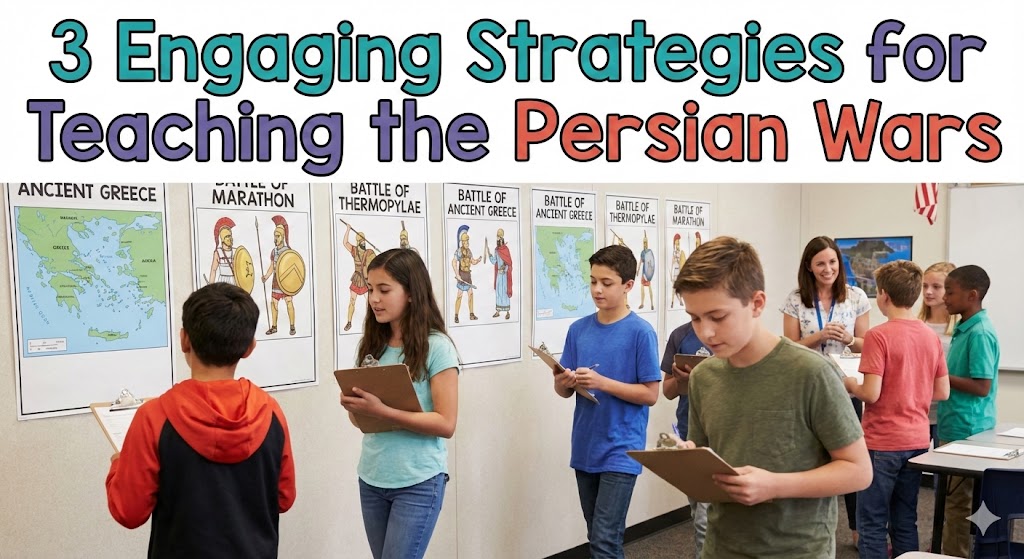
I’m biased because I created it, but my Disney Themed Text Structure Gallery Walk is one of those activities that makes the room feel different right away. Students read about familiar movies and characters while practicing description, sequence, compare and contrast, cause and effect, and problem and solution.
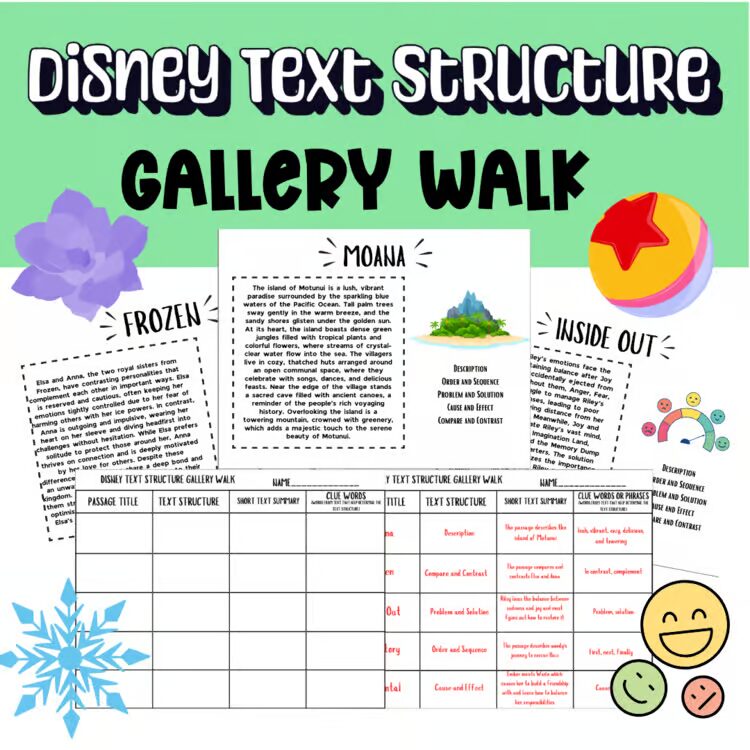
The gallery walk format helps too. Students are moving, reading, and writing instead of staring at one long passage. It feels more like practice and less like a lecture about organizational patterns.
Have students prove the structure
I do not want students to just write “cause and effect” and move on. I want them to prove it. What signal words did they notice? What caused what? What problem was solved? What two things are being compared?
Those little explanations are where the real reading comprehension shows up.
Let students write their own examples
After students identify text structures, have them write a short paragraph using one. Disney topics work here too. They might write a sequence about a movie plot, a compare and contrast paragraph about two characters, or a cause and effect paragraph about a character’s choice.
Writing the structure helps students understand it from the inside. It is a quick way to move from “I can recognize this” to “I can actually use this.”
If you teach ELA skills with novels too, this connects nicely with a Hatchet novel study or a character traits activity. Text structure shows up everywhere once students know how to look for it.
Text structure does not have to be dry. Give students a topic they know, get them moving, and make them explain their thinking. That combination works.
Classroom-ready resource
Want the ready-to-use version?
If you want the activity without building it from scratch, this resource is ready to print, share, and use with upper elementary or middle school students.
Grab free no-prep science & social studies resources
Get instant access to review templates, vocabulary posters, gallery walk samples, quick-check activities, and hands-on practice ideas for upper elementary and middle school.