3 Engaging Strategies for Teaching the Persian Wars
The Persian Wars can either be really exciting or really confusing for students. Battles, city-states, leaders, invasions, maps—it can turn into a list of names quickly if we are not careful.
I like teaching the Persian Wars as a story. Not a fake dramatic story, but the real one: Greek city-states with plenty of disagreements suddenly having to face a huge outside threat. That gives students a reason to care about Marathon, Thermopylae, Salamis, and why these battles mattered.
Start with the big question
Before getting into details, I like asking students why smaller groups might unite against a larger empire. What would make rivals cooperate? What would they risk losing?
That question helps students understand the Persian Wars as more than a timeline. They start thinking about independence, geography, strategy, and fear. Much better than just “write these dates down.”
Use maps constantly
Maps are not optional with this topic. Students need to see the distance between Persia and Greece, the location of Athens and Sparta, the narrow pass at Thermopylae, and why naval battles mattered.
I like having students trace movement and then explain why geography helped or hurt each side. It turns the map into evidence instead of decoration.
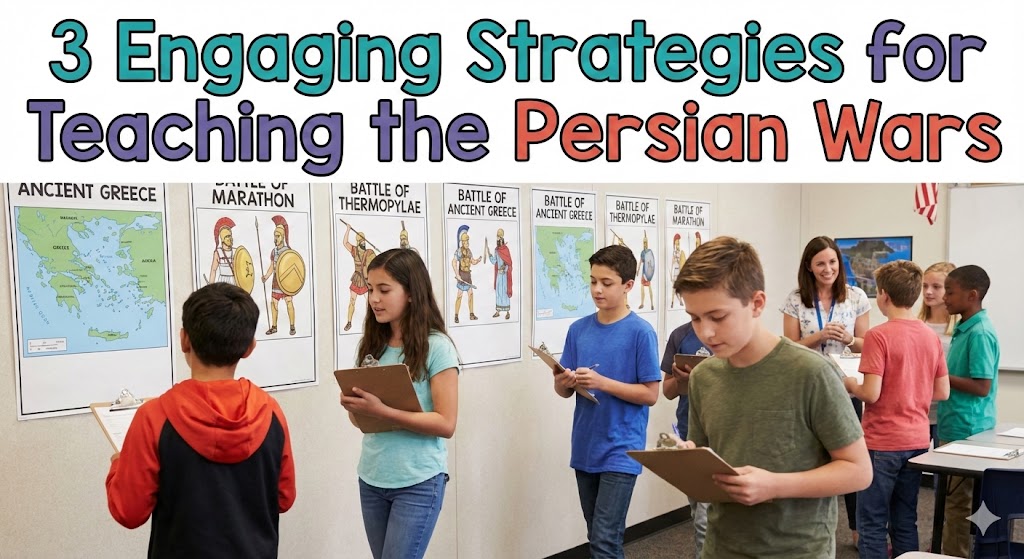
Get students moving with a Persian Wars gallery walk
My favorite way to introduce or review this topic is with stations. Students can read about the major battles, leaders, and outcomes in smaller pieces, then put the story together as they go.
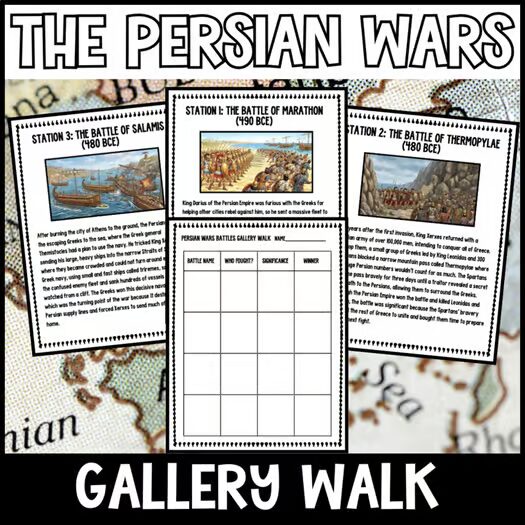
I created this Persian Wars Gallery Walk for exactly that reason. It gets students out of their seats and gives them a focused way to read, write, and process the main events without drowning in a textbook section.
End with significance, not just winners
After students know what happened, I like asking, “So what?” Why did it matter that the Greeks won? How did the wars affect Athens? What changed for the Greek city-states afterward?
This sets up later conversations about Athens and Sparta and Ancient Greece achievements. The Persian Wars become part of the larger Greece story instead of a random battle unit.
If students can explain why the Persian Wars mattered, not just who fought in them, you are in good shape.
Classroom-ready resource
Want the ready-to-use version?
If you want the activity without building it from scratch, this resource is ready to print, share, and use with upper elementary or middle school students.
Grab free no-prep science & social studies resources
Get instant access to review templates, vocabulary posters, gallery walk samples, quick-check activities, and hands-on practice ideas for upper elementary and middle school.