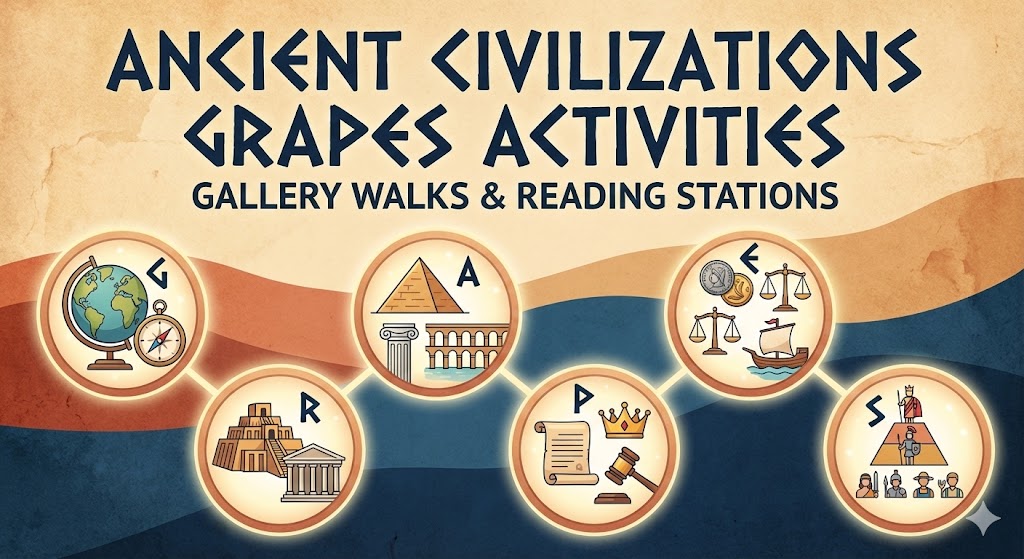
Ancient Civilizations GRAPES Activities: Gallery Walks & Reading Stations
Ancient civilizations can start to blur together for students. Egypt, Mesopotamia, India, China, Greece, Rome—new names, new geography, new achievements, new religions. It is a lot for a middle school brain to organize.
That is why I like using GRAPES. Geography, Religion, Achievements, Politics, Economics, and Social Structure gives students a repeatable way to think. Once they know the categories, they have a mental filing cabinet for every civilization you teach.
Use the same framework all year
The best part of GRAPES is the routine. Students are not starting from scratch every time you begin a new unit. They already know what kinds of questions to ask: Where did people live? What did they believe? Who had power? How did they make money? What did they create?
That consistency saves time and helps students compare civilizations instead of just memorizing isolated facts.
Make GRAPES active with gallery walks
I am a big fan of gallery walks for social studies because they get students moving, reading, and writing. Instead of me talking through every category, students can rotate through stations and collect information in smaller chunks.
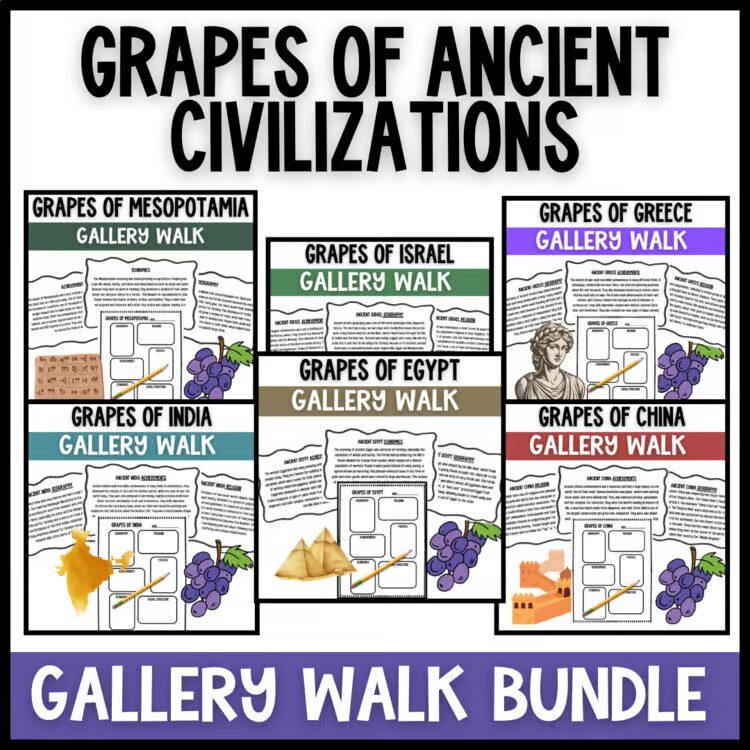
I’m biased because I made it, but the Ancient Civilizations GRAPES Gallery Walk Bundle is built for that exact routine. Students can visit the stations, read focused passages, and organize what they learn by GRAPES category.
Have students compare instead of recite
After a gallery walk, I like giving students a quick comparison task. Which two civilizations had similar geography? Which achievements still matter today? How were governments different?
This is where GRAPES really earns its keep. Students can go back to the same categories and make connections without feeling lost in a giant pile of notes.
Keep a running classroom anchor chart
A simple GRAPES chart on the wall can be surprisingly helpful. Add a few key details as you move through each unit. By the end of the year, students can physically see how civilizations connect and differ.
If you are teaching Ancient Egypt, Ancient Greece achievements, or Ancient Rome review, GRAPES gives all of those units a common thread.
Ancient civilizations are full of details, but students need structure before they can make meaning from them. GRAPES keeps the year organized and makes the learning feel a lot less random.
Classroom-ready resource
Want the ready-to-use version?
If you want the activity without building it from scratch, this resource is ready to print, share, and use with upper elementary or middle school students.
Grab free no-prep science & social studies resources
Get instant access to review templates, vocabulary posters, gallery walk samples, quick-check activities, and hands-on practice ideas for upper elementary and middle school.