
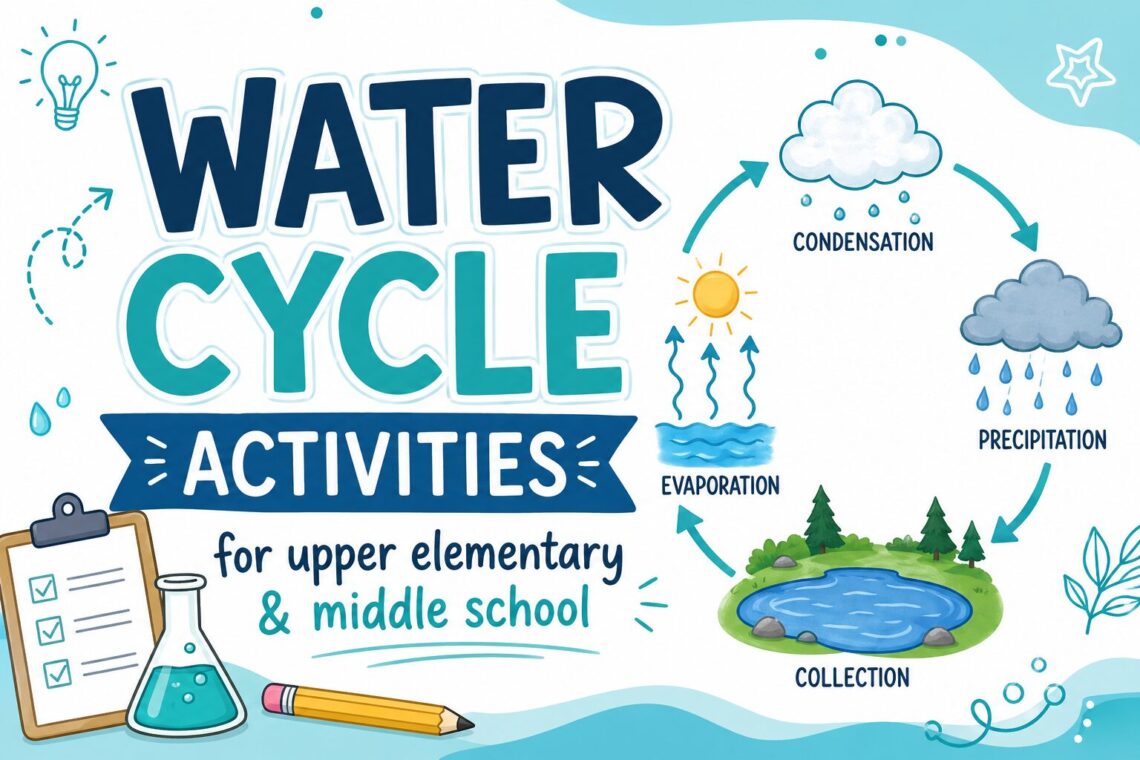
Water Cycle Activities for Upper Elementary and Middle School
Teaching the water cycle can feel simple at first—until students start mixing up evaporation, condensation, precipitation, and collection. The vocabulary is short, but the process is full of movement, cause-and-effect, and real-world examples that students need time to connect.
If you teach upper elementary or middle school science, a few low-prep routines can make your water cycle lesson feel much more concrete. These ideas work well during an Earth science unit, as review before a quiz, or as a way to bring more reading and discussion into science class.
Start with the big picture before the vocabulary
Before students memorize each water cycle term, give them a simple overview of the full process. I like to frame it as a continuous journey: water moves from Earth’s surface, into the atmosphere, and back again. Once students understand that the cycle keeps repeating, the vocabulary has somewhere to “stick.”
A quick sketch, anchor chart, or projected diagram works well here. Keep it simple at first. Add arrows, ask students what they notice, and let them explain where they think the water is moving. Then layer in words like evaporation, condensation, precipitation, and collection.
Connect each stage to a real-world example
Water cycle activities are much stronger when students can connect each stage to something they have seen before. Instead of only defining evaporation, ask students where they have noticed puddles disappearing after rain. For condensation, connect it to water droplets on a cold cup or foggy windows. For precipitation, compare rain, snow, sleet, and hail.
These everyday examples help students realize the hydrologic cycle is not just a diagram in a textbook. It is happening around them all the time. This also gives students stronger examples to use when they answer written questions or explain the water cycle in their own words.
Use movement with a water cycle gallery walk
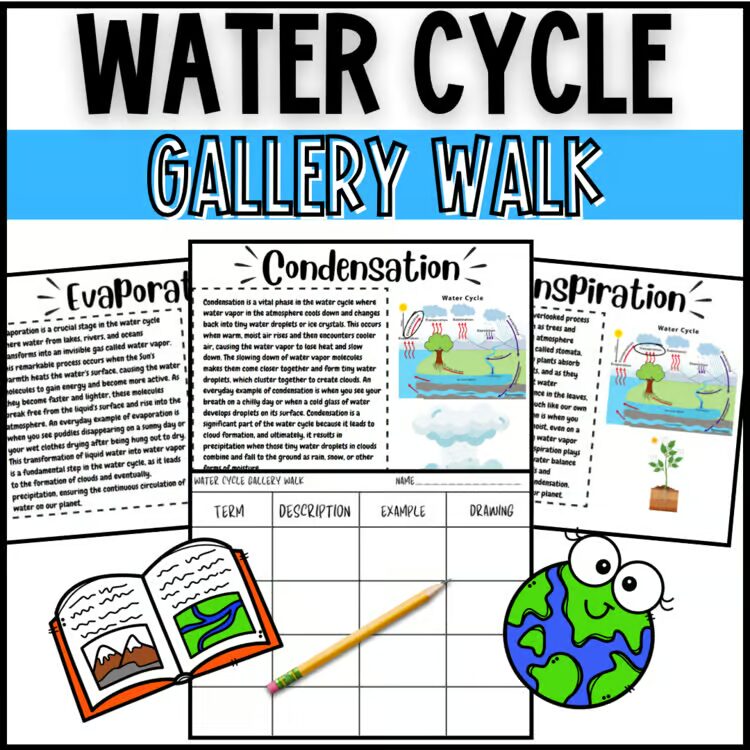
If your students need a break from sitting, a Water Cycle Gallery Walk is a great way to turn Earth science reading into something more active. Students rotate through reading stations, learn about different parts of the hydrologic cycle, and record important details as they go.
This works especially well for upper elementary and middle school because students get short chunks of information instead of one long reading passage. They are still reading closely, but the movement helps keep the lesson from feeling flat. It is also easy to use as an introduction, review activity, station rotation, or sub-friendly science lesson.
Have students draw and explain the process
Once students have read about the water cycle, ask them to draw it from memory and explain each step in their own words. This is a quick way to check whether they understand the relationships between each stage or if they are just copying vocabulary.
You can make this as simple or structured as you want. Students might create a labeled diagram, write a short paragraph, or complete a “journey of a water droplet” response. The key is requiring both visuals and explanation, because that combination helps reveal misunderstandings quickly.
Review with quick comparison questions
Students often understand the water cycle better when they compare similar ideas. Try asking questions like:
- How are evaporation and condensation different?
- Why does precipitation happen after condensation?
- What role does the sun play in the water cycle?
- How does runoff connect to collection?
These questions push students beyond matching terms to definitions. They have to think about how the parts of the cycle work together, which is exactly what they need for stronger science understanding.
Keep your water cycle lesson simple, active, and connected
The water cycle is one of those science topics that students can understand deeply when they have the right mix of visuals, movement, reading, and discussion. Start with the big picture, connect vocabulary to real-world examples, and give students chances to explain the process in their own words.
If you want a low-prep way to add movement and reading to your Earth science unit, this Water Cycle Gallery Walk activity is designed to help students review the hydrologic cycle through engaging classroom stations.

