
Weather Safety Activities That Make Severe Weather Feel Real
Severe weather is one of those topics students usually want to talk about. They have storm stories, questions, random facts, and sometimes a little too much confidence about what they would do in an emergency.
That is why I like turning part of a storms unit into a weather safety activity, not just a vocabulary lesson. Students still need to know what tornadoes, hurricanes, floods, blizzards, and thunderstorms are, but they also need to think about what makes each event dangerous and how people can respond safely.
Here are a few simple ways to make severe weather safety feel more real for upper elementary or middle school students.
Start with a real-life weather safety scenario
Before jumping into definitions, give students a quick situation to think through. Something like:
- You hear there is a tornado warning while you are at school.
- Your family is preparing for a hurricane.
- A thunderstorm starts while people are outside at a game.
- Heavy rain is causing water to cover nearby roads.
These little scenarios help students realize severe weather is not just a list of storm types. It connects to decisions people actually have to make.
I like asking students two questions: What is the danger? and What should people do next? Those questions keep the discussion practical and give you a quick look at misconceptions before the lesson gets too far.
Help students compare the dangers, not just name the storms
Students can often name severe weather events faster than they can explain why each one is dangerous. A tornado, flood, hurricane, wildfire, blizzard, and ice storm all create different problems, so the comparison piece matters.
One easy chart is to have students track:
- What causes the danger
- Where the event usually happens
- What people should avoid
- One safety step that would help
This keeps the activity from turning into “storms are scary.” Students start noticing that weather safety depends on the type of event, the location, and the choices people make.
Use a severe weather gallery walk for safety-focused reading
A gallery walk works really well here because students can slow down and focus on one severe weather event at a time. Instead of handing them one long passage, they rotate, read, collect details, and compare as they go.
I am biased because I created this one, but my Severe Weather Gallery Walk is a good fit for this kind of lesson. Students read about tornadoes, hurricanes, blizzards, dust storms, hail storms, wildfires, severe thunderstorms, floods, and ice storms while completing an answer sheet.
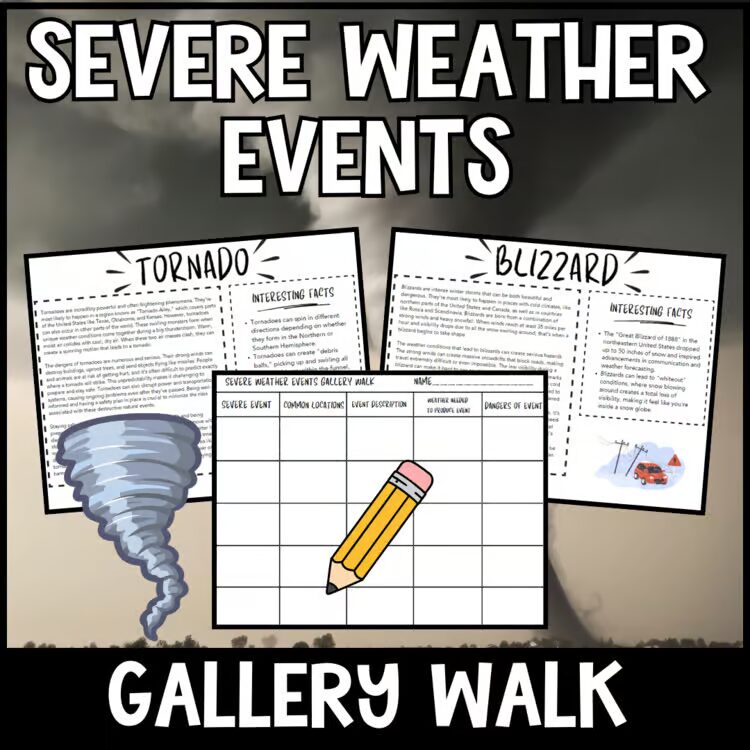
You can use it as a regular storms reading stations activity, but it also works really naturally as a severe weather safety lesson. Have students add a safety note at each station or highlight the detail that would matter most in a real emergency.
Add a quick “best safety advice” challenge
After students read about each event, give them a small challenge: write one piece of safety advice for someone who has never experienced that type of severe weather before.
This sounds simple, but it pushes students to translate science information into useful language. They have to decide what matters most and explain it clearly.
You can make it more fun by assigning each group a different audience:
- a new student at your school
- a younger sibling
- a family visiting from another state
- a coach planning an outdoor practice
That tiny audience shift helps students think about communication, not just copying notes.
End with a “what would you do?” discussion
My favorite way to wrap up a weather safety activity is with a few quick “what would you do?” prompts. Students can answer on whiteboards, in partners, or as a short exit ticket.
- What would you do if a tornado warning happened during class?
- What would you avoid during a flood?
- Why is a car not always a safe place during severe weather?
- Which severe weather event would be hardest to prepare for?
These questions are great because students have to use what they read. They are retrieving information, applying it, and explaining their thinking in a way that feels connected to real life.
Make severe weather safety practical
Severe weather lessons do not have to be overly dramatic to be memorable. A few scenarios, a comparison chart, and a strong reading activity can help students understand both the science and the safety side of storms.
If you want a ready-to-use station activity, you can check out the Severe Weather Gallery Walk storms reading stations activity here. It gives students a structured way to read, move, write, and think carefully about the severe weather events they are learning about.
Grab free no-prep science & social studies resources
Get instant access to review templates, vocabulary posters, gallery walk samples, quick-check activities, and hands-on practice ideas for upper elementary and middle school.