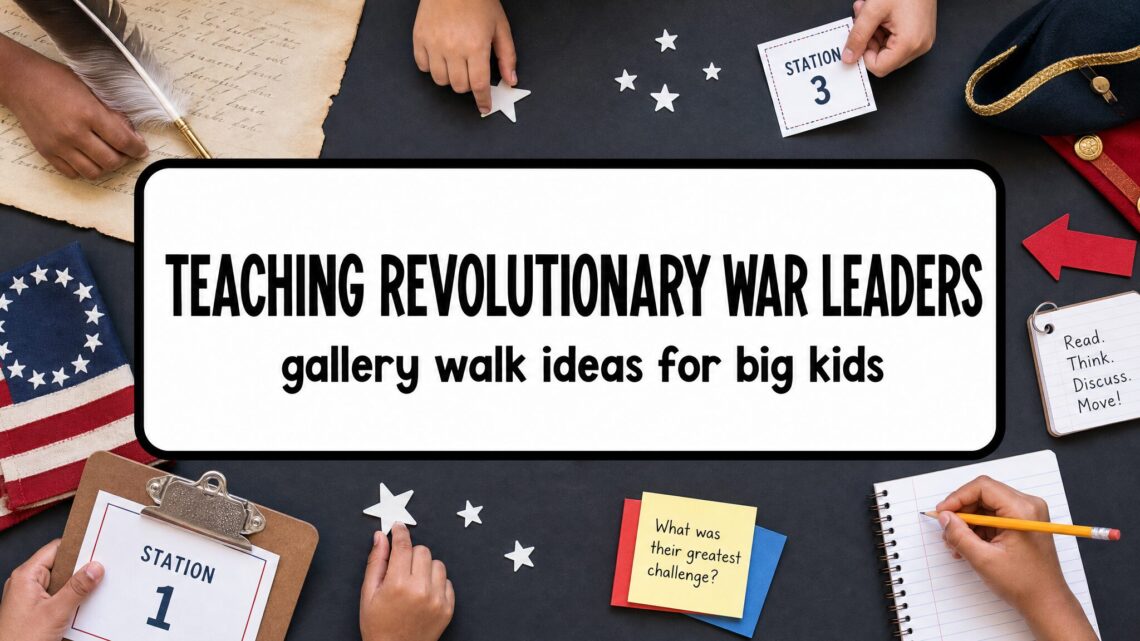
Teaching Revolutionary War Leaders with a Gallery Walk
Revolutionary War leaders can turn into a long list of names really fast. Students may remember George Washington and maybe Paul Revere, but once you add Loyalists, writers, political leaders, and lesser-known voices, it can start to feel like a lot.
My favorite solution is to get students moving, reading, and writing in smaller chunks. A People of the American Revolution gallery walk works especially well because students are not just sitting through one big lecture about every person. They are meeting each figure one station at a time.
Start with the question students actually need to answer
Before students start reading, I like giving them a simple purpose: Who was this person, which side were they on, and why did they matter?
That keeps the activity focused. Instead of copying random facts, students are reading for allegiance, significance, and one interesting detail. It also makes Revolutionary War leaders feel more connected to the bigger American Revolution unit.
Use movement to keep the reading from feeling heavy
I’m biased toward gallery walks because they sneak in movement without turning the room chaotic. Students rotate, read a short passage, jot down the important information, and move on. It breaks up the reading in a way that feels much more manageable for upper elementary and middle school students.
This is especially helpful for a topic like the people of the American Revolution. Students can compare Patriots and Loyalists, notice how writers and leaders influenced the war, and see that history was shaped by more than one famous person.
Make students record the same details at every station
A simple recording sheet makes the gallery walk feel purposeful. I like having students track:
- the person’s name
- whether they were a Patriot or Loyalist
- why they were important
- one interesting fact
That repeated structure helps students compare people without getting lost. It also gives you something useful to check afterward, whether you want a quick discussion, a written response, or a review game the next day.
A ready-to-use Revolutionary War leaders activity
If you want this already built, I created a People of the American Revolution Gallery Walk with short reading stations and a student answer sheet. It includes figures like George Washington, Paul Revere, John Adams, King George III, Thomas Paine, Betsy Ross, Benedict Arnold, Abigail Adams, Thomas Jefferson, Patrick Henry, and Lord Cornwallis.
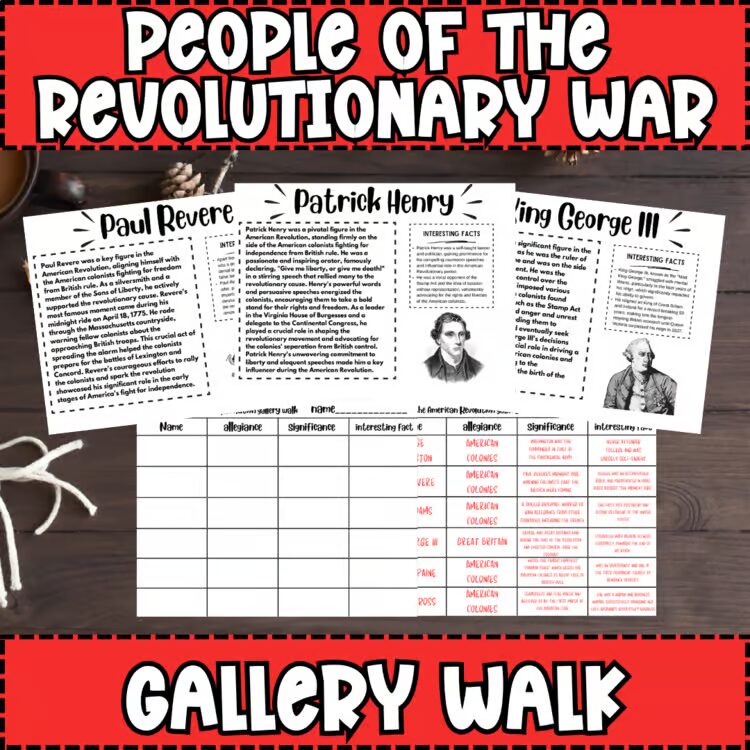
It is designed to be no-prep, but still gives students a real reason to read. They move around the room, gather information, and build a better picture of the people behind the American Revolution.
Wrap it up with a quick comparison
After the gallery walk, I like ending with one quick comparison question. Something like, “Which person had the biggest impact on the Revolution, and why?” or “Which person surprised you the most?”
Those little questions help students move beyond copying facts. They have to retrieve what they read, make a choice, and explain their thinking. Simple, but it works.
If your American Revolution unit needs a little more movement and a little less lecture, a Revolutionary War leaders gallery walk is a really nice place to start.
Grab free no-prep science & social studies resources
Get instant access to review templates, vocabulary posters, gallery walk samples, quick-check activities, and hands-on practice ideas for upper elementary and middle school.