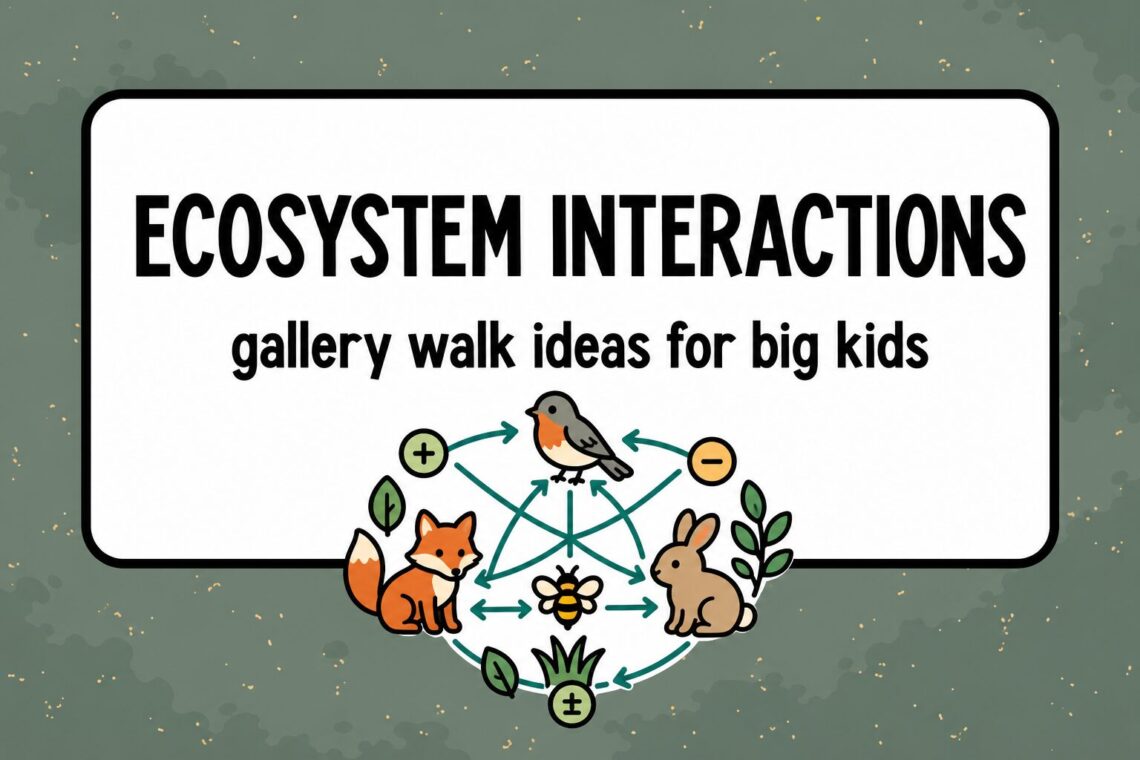
Ecosystem Interactions Gallery Walk Activity for Upper Elementary Science
Ecosystem interactions can get a little tangled for students. They may remember that mutualism is “both benefit,” but then predation, competition, and other symbiotic relationships start blending together as soon as you ask them to explain what is happening in an actual example.
That is why I like using an ecosystem interactions gallery walk during an ecosystems unit. It gets students up, gives them short chunks of reading, and lets them slow down with one relationship at a time instead of trying to sort every vocabulary word from a single notes page.
Start with the classroom problem: the examples matter
Most students can copy the definitions. The harder part is looking at two organisms and deciding what is really happening between them. Is one organism helped while the other is harmed? Are they competing for the same resource? Is this predator-prey, or is something else going on?
For upper elementary science, I want students reading, talking, and pointing back to evidence. A quick ecosystem interactions activity works best when it gives them examples that are simple enough to follow but still make them think.
Use movement to break up the vocabulary load
I’m biased toward gallery walks because they change the energy in the room without turning the lesson into chaos. Students rotate, read a short passage, and answer the same kind of question at each stop. That repeated structure helps a lot.
With ecosystem interactions, the movement gives students a reset between examples. They are not staring at one long worksheet trying to keep every relationship straight. They are moving, reading, looking, writing, and retrieving the concept again at the next station.
Make the ecosystem interactions gallery walk do the thinking work
A good ecosystem interactions gallery walk should ask students to do more than name the relationship. I like having students identify:
- the interaction type
- what is happening between the organisms
- who is helped, harmed, or unaffected
- how the interaction affects the ecosystem
That last part is important. It nudges students beyond “this is mutualism” and into “this is mutualism because both organisms benefit.” That little because is where the learning usually shows up.
Pull symbiosis into normal teacher language
When I teach symbiosis, I try not to make it feel like a fancy word students just have to memorize. I want them to see it as a way organisms live around each other. Some relationships help both organisms. Some help one and hurt another. Some are all about food, space, shelter, or survival.
A symbiosis reading stations format gives students repeated practice with that idea. They see different examples, but the task stays familiar, which is especially helpful for grades 4-6.
Try the ready-to-use science gallery walk
If you want the stations already built, I made this Ecosystem Interactions Gallery Walk for upper elementary science.
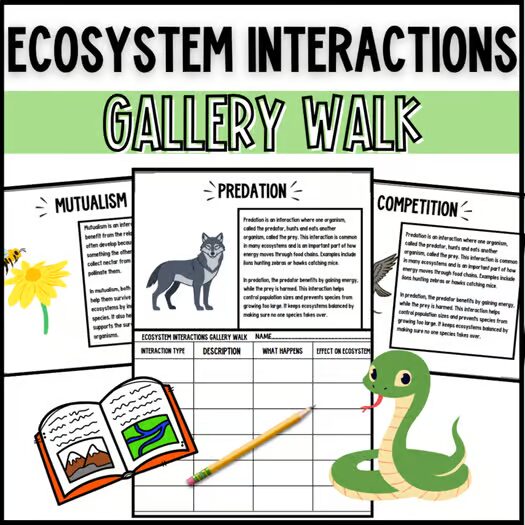
It includes 6 reading stations focused on ecosystem interactions and symbiosis, plus a student answer sheet, answer key, and simple directions. Students rotate through the stations and practice identifying interaction types like predation, competition, and mutualism while explaining what is happening between the organisms.
I like this kind of science gallery walk because it is active without being complicated. Students have a clear job at each stop, and you are not spending half the class period explaining directions.
End with one quick sort or discussion
After the gallery walk, I like doing a fast wrap-up question or sort. Nothing fancy. You could ask students:
- Which interaction was easiest to identify? Why?
- Which example was trickiest?
- How are competition and predation different?
- Which relationship had the biggest effect on the ecosystem?
Those questions help students use the vocabulary one more time before moving on. Having students crawl back into their memory often is so necessary, especially with science terms that sound similar at first.
If your ecosystems unit needs a little more movement and a little less “copy the definition,” an ecosystem interactions gallery walk is a practical way to get students reading, moving, and explaining the relationships they see.
Grab free no-prep science & social studies resources
Get instant access to review templates, vocabulary posters, gallery walk samples, quick-check activities, and hands-on practice ideas for upper elementary and middle school.