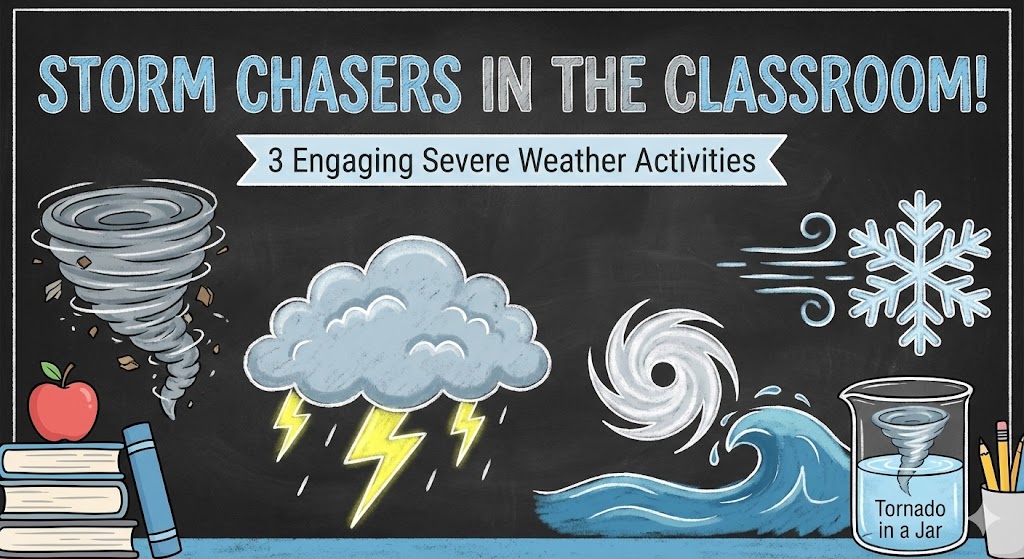
Storm Chasers in the Classroom: 3 Engaging Severe Weather Activities
Is there any unit more naturally engaging than severe weather? The moment you mention tornadoes, hurricanes, or blizzards, you can practically see your students leaning in. There is something about the sheer power of nature that captivates kids (and, let’s be honest, adults too!).
But moving beyond the “wow factor” to the actual science—safety, formation, and characteristics—can sometimes feel like a dry recitation of facts. How do we harness that natural curiosity and turn it into deep learning?
If you are looking to storm-proof your lesson plans, here are three of my favorite strategies for teaching severe weather!
1. The Severe Weather Gallery Walk
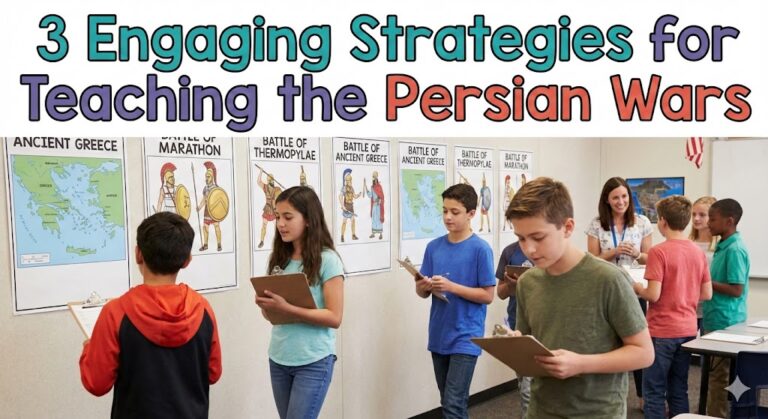
This is my top strategy for introducing the unit or reviewing before a test. I love it because it’s student-led, gets kids out of their seats, and integrates critical reading skills into science class.
I recently started using this Severe Weather Events Gallery Walk, and it has been a huge hit.

Here is why it works: Instead of a lecture, students rotate through different stations that feature reading passages on major weather events like tornadoes, hurricanes, blizzards, dust storms, and wildfires.
For each station, they read a short, informative text and fill out a recording sheet that asks them to identify:
- Common Locations: Where does this usually happen?
- Dangers: What makes it scary?
- Safety: How do you survive it?
It’s completely no-prep for you (just print and tape!), and it hits those observation rubric requirements for active learning. Plus, it covers less common events like dust storms and ice storms, which students find fascinating!
You can grab the Severe Weather Events Gallery Walk here!
2. Tornado in a Jar
You cannot teach severe weather without this classic science demo. It is the perfect visual for showing the vortex of a tornado.
The Setup:
- Fill a clear jar about 3/4 full with water.
- Add a teaspoon of dish soap and a teaspoon of vinegar.
- Optional: Add some glitter (because debris makes it easier to see!).
The Action: Screw the lid on tight and give the jar a strong swirl. Set it down and watch the vortex form! It’s a simple, powerful way to explain how rotating winds form the funnel shape of a tornado.
3. The “Emergency Preparedness” Challenge
This activity connects the science to real-world safety. Once students understand the dangers of different storms, challenge them to build the ultimate “Survival Kit.”
Give them a scenario (e.g., “A hurricane is approaching the coast” or “A blizzard has trapped you at home”).
- The Task: Have them create a list of 10 essential items they would need in their kit and explain why based on the science of the storm. (e.g., “We need blankets because blizzards cause freezing temperatures” or “We need gallons of water because hurricanes can contaminate the supply”).
It helps them think critically about the impact of weather on human life.
Weathering the Storm
Whether you are swirling glitter tornadoes, planning survival kits, or exploring a gallery of natural disasters, the goal is to empower students with knowledge. When they understand how these storms work, they move from fear to fascination.