
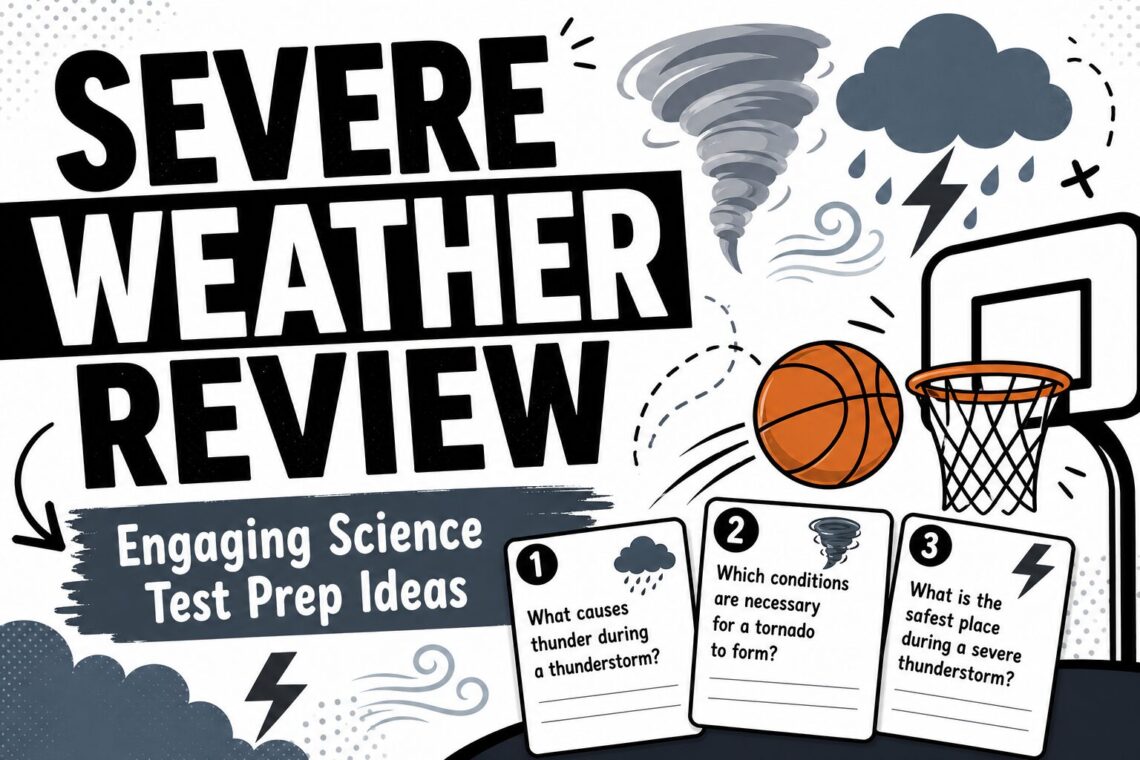
Severe Weather Review Ideas That Keep Students Engaged
Severe weather is one of those science topics students usually find interesting right away — tornadoes, hurricanes, thunderstorms, blizzards, and safety scenarios naturally grab their attention. The tricky part is turning that curiosity into meaningful review before a quiz, unit test, or end-of-year assessment.
If your students know the vocabulary but still mix up the details, a good severe weather review day can make a big difference. The goal is to keep the energy high while still giving students repeated practice with the concepts they actually need to remember.
Here are a few teacher-friendly ways to review severe weather without handing students another worksheet and hoping for the best.
Start with quick weather scenario questions
Scenario questions are perfect for severe weather test prep because they ask students to apply what they know instead of simply defining terms.
You might ask students to identify which severe weather event is most likely based on clues, choose the safest action during a storm, or explain what conditions could lead to a tornado or hurricane. These short questions help students connect vocabulary to real-world decision-making.
Try keeping scenarios brief and focused. A question about a weather alert, wind speed, storm conditions, or safety location can spark a useful discussion without taking over the whole class period.
Review vocabulary in context
Students often memorize words like tornado, hurricane, thunderstorm, drought, and blizzard, but they may still struggle to explain how the events are different. Instead of reviewing vocabulary as isolated definitions, place the terms inside examples.
For example, students can sort descriptions, match weather conditions to severe weather events, or explain why one storm type fits a situation better than another. This keeps your weather and storms review more meaningful and helps students notice the details that matter.
A quick partner activity works well here: one student reads a clue, the other identifies the severe weather event and explains the reasoning. It is simple, but it forces students to practice both recall and explanation.
Add movement with a science review game
When students are tired of sitting, a science review game can reset the room fast. Severe weather is especially good for game-based review because the questions can be short, visual, and discussion-friendly.
One option is a Trashketball-style review game. Students answer multiple-choice severe weather questions, then earn a chance to shoot a basket for their team. It feels playful, but students are still reviewing storm types, weather safety, conditions for severe weather, and key science vocabulary.
If you want a ready-to-use option, this Severe Weather Events Trashketball Review Game includes 25 multiple-choice questions with answer slides, so it works well for an end-of-unit review, test prep day, or a quick high-engagement activity before assessment.
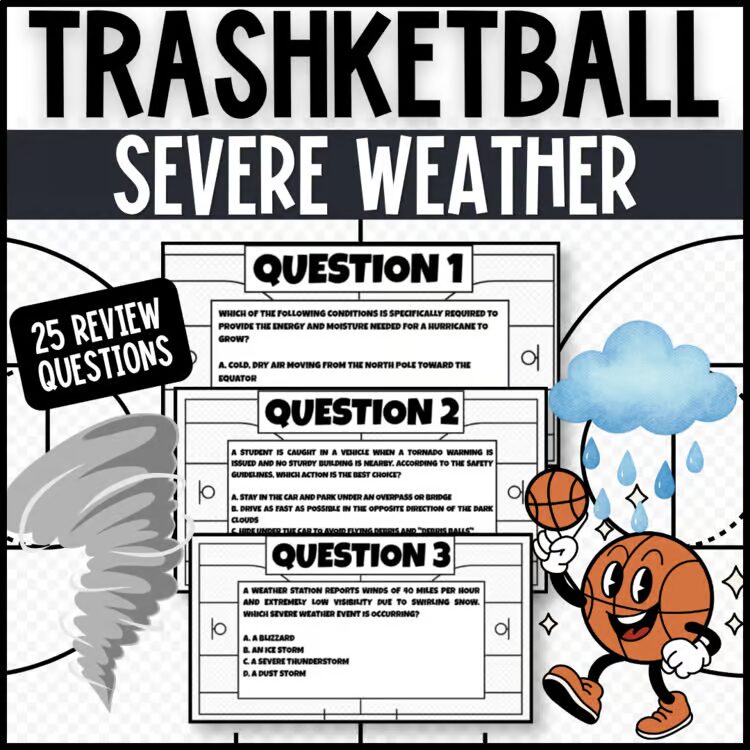
You can find it here: Severe Weather Events Trashketball Review Game
Use mistakes as mini-lessons
During severe weather review, wrong answers are incredibly useful. If several students choose the same incorrect answer, pause and turn it into a quick mini-lesson.
Ask students why the tempting answer seems reasonable, then guide them toward the clue that rules it out. This helps students slow down and read carefully, which is exactly what they need for science test prep.
This works especially well with questions about storm safety. Students may know the general rule, but a specific scenario can reveal misunderstandings about where to go, what to avoid, or what different alerts mean.
End with one confidence-building check
Before moving on, give students one final low-stress check for understanding. This could be an exit ticket, a one-question whiteboard response, or a quick “which severe weather event am I describing?” prompt.
Keep it short. The point is to help students leave review feeling a little more confident and to give you one last look at what might need reteaching.
Severe weather review does not have to be quiet or worksheet-heavy to be effective. With a mix of scenarios, vocabulary practice, movement, and quick discussion, students can review important weather and storms concepts in a way that actually sticks.
If you want a low-prep game option, you can check out the Severe Weather Trashketball review activity here: Severe Weather Events Trashketball Review Game

