
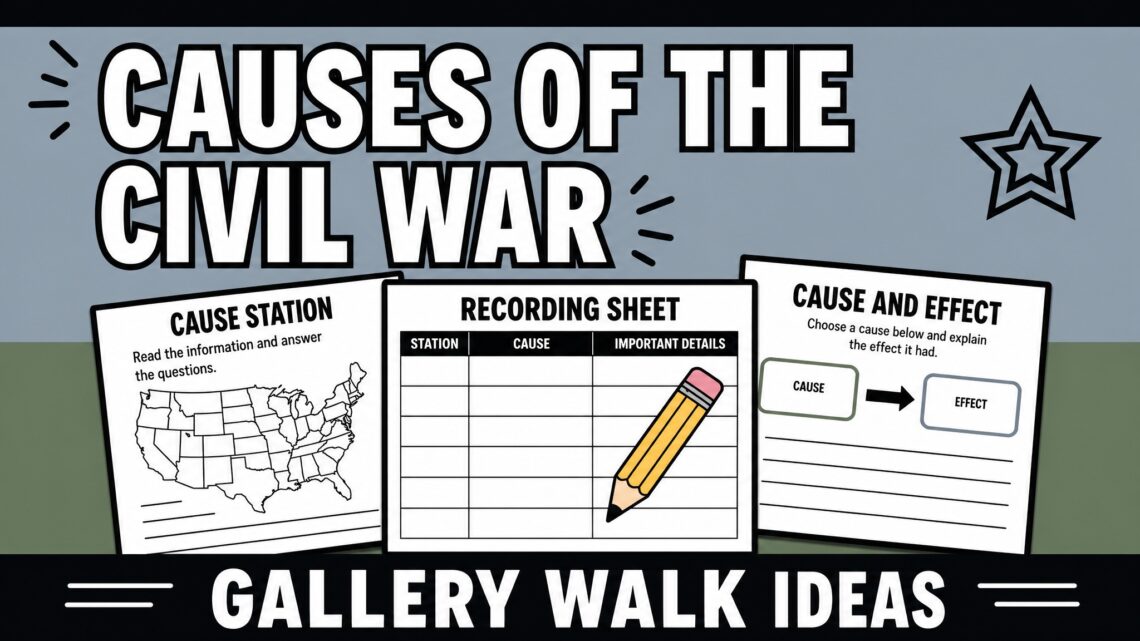
Teaching Causes of the Civil War with a Gallery Walk
Causes of the Civil War can be one of those topics where students remember a few big words, but they do not always connect how the issues built on each other. They might know slavery was central, or that states’ rights comes up, but the cause-and-effect part can get fuzzy fast.
That is why I like using a Causes of the Civil War gallery walk. It gives students a way to slow down, read one cause at a time, and physically move through the buildup to war instead of trying to take in everything from one long lecture or textbook section.
Start with one question: how did this increase tension?
When students study the causes of the Civil War, I do not want them only copying definitions. I want them asking, “How did this make the conflict worse?” That one question helps turn the lesson into actual historical thinking.
You can use this with any Civil War causes activity. After students read about a topic like slavery, states’ rights, westward expansion, or political conflict, have them write one sentence explaining how it increased tension between the North and South. Simple, but it forces them to do more than list facts.
Use reading stations to make the content feel manageable
This is my favorite reason to use social studies reading stations. The content feels less overwhelming when students only have one focused passage or station in front of them at a time.
Instead of saying, “Today we are covering all the causes of the Civil War,” the lesson becomes more like, “At this station, figure out what happened and why it mattered.” That chunking helps, especially for upper elementary and middle school U.S. History students who are still building stamina with informational text.
Get students moving, reading, and writing
I am biased toward gallery walks because they get students out of their seats without turning the room into chaos. There is a purpose for the movement. Students rotate, read, record, and keep going.
For a Civil War causes gallery walk, I like having students complete a recording sheet as they move. It keeps them accountable, but it also gives them something useful to look back at during discussion, review, or a writing response later.
Try a ready-to-use Causes of the Civil War gallery walk
If you want the structure already built, I created this Causes of the Civil War Gallery Walk Reading Stations Activity for exactly this kind of lesson.
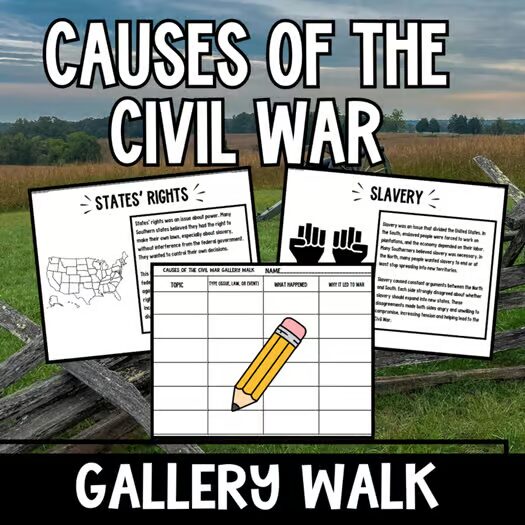
Students rotate through six reading stations, record what happened at each one, and explain how each cause increased tension between the North and South. It includes the student answer sheet, complete answer key, and simple directions, so it works well when you need a low-prep U.S. History activity that still has students reading and thinking.
End with a quick synthesis task
The best part of a gallery walk is the conversation after it. Once students have visited each station, ask them to rank the causes, choose the most important one, or write a short response explaining how multiple causes connected.
You can keep it quick:
- Which cause created the most tension? Why?
- Which two causes were most connected?
- What pattern did you notice across the stations?
- How did disagreements over power, economy, and slavery build over time?
Those questions help students move from “I filled out the sheet” to “I can explain the buildup to the Civil War.” That is the goal.
If you need a ready-to-print option, you can check out the Causes of the Civil War Gallery Walk Reading Stations Activity here. It is an easy way to get students reading, moving, writing, and making sense of the causes instead of just memorizing a list.
