Mesopotamia Ziggurat Project Activity for 6th Grade Social Studies
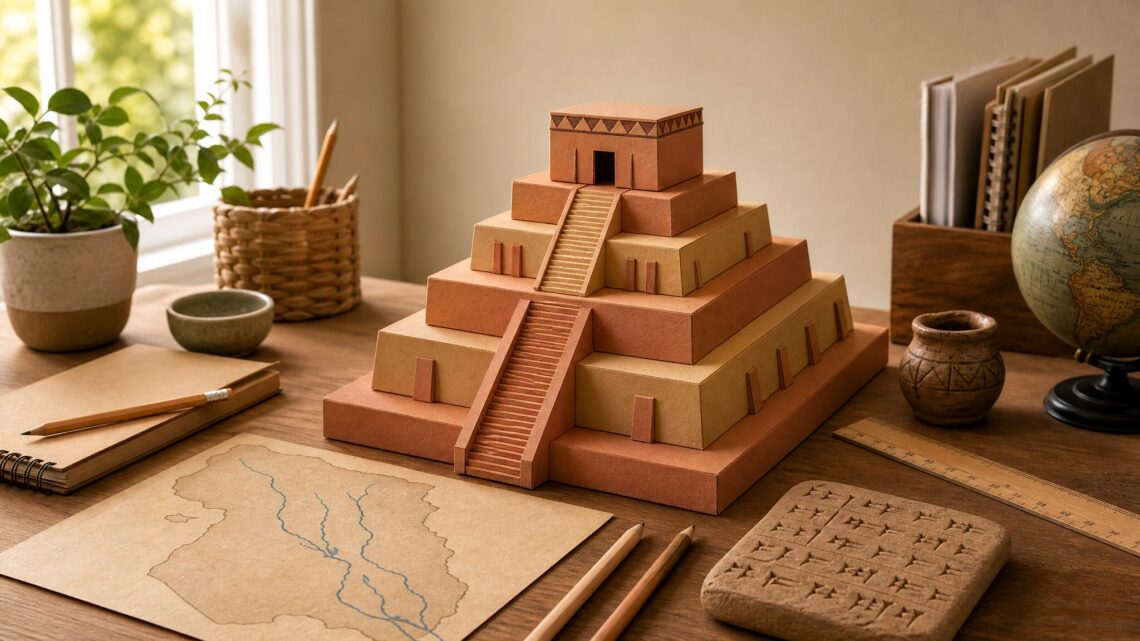
If your ancient Mesopotamia unit is starting to feel like a long list of vocabulary words, maps, and river valley facts, a hands-on ziggurat project can help students slow down and actually picture what they are learning.
Ziggurats are one of those topics that students usually understand better when they can build, label, and explain something instead of only reading about it. They can see the tiered structure, connect it to religion and city life, and use the project as a quick way to review key vocabulary from the unit.
Why a 3D Ziggurat Activity Works
A ziggurat is already a visual concept, so it makes sense to teach it with something students can see and assemble. A simple 3D craft gives students a concrete model while still keeping the focus on social studies content.
The best version of this activity is not just “color and cut.” I like it more when students have to read a short passage, pull out important information, define key terms, and answer a few comprehension questions before the model is finished. That keeps the activity from turning into busy work.
Connect the Project to the Big Ideas of Mesopotamia
Before students build, give them a purpose. Ask questions like:
- Why were ziggurats important in Mesopotamian city-states?
- What does the size and location of a ziggurat tell us about religion and power?
- How did geography, farming, government, and religion connect in early civilizations?
If you are teaching ancient civilizations as a larger unit, this pairs naturally with a GRAPES framework. I also have a related post on Ancient Civilizations GRAPES activities if you want students comparing Mesopotamia with Egypt, Greece, Rome, India, or China.
Make It More Than a Craft
The easiest way to make a ziggurat project academically useful is to build in three pieces: reading, vocabulary, and explanation. Students should be able to point to their finished model and explain what a ziggurat was, who used it, and why it mattered.
You can also have students complete a quick exit ticket after the project. A simple prompt like “Explain why ziggurats were important to Mesopotamian city-states” tells you quickly whether the activity helped the content stick.
A Low-Prep Mesopotamia Ziggurat Project
If you want the hands-on piece without having to design the template from scratch, I made a Mesopotamia Ziggurat Project 3D Craft Activity with Reading and Vocabulary. It includes a one-page reading passage, a four-sided ziggurat template, vocabulary practice, comprehension questions, and visual assembly directions.
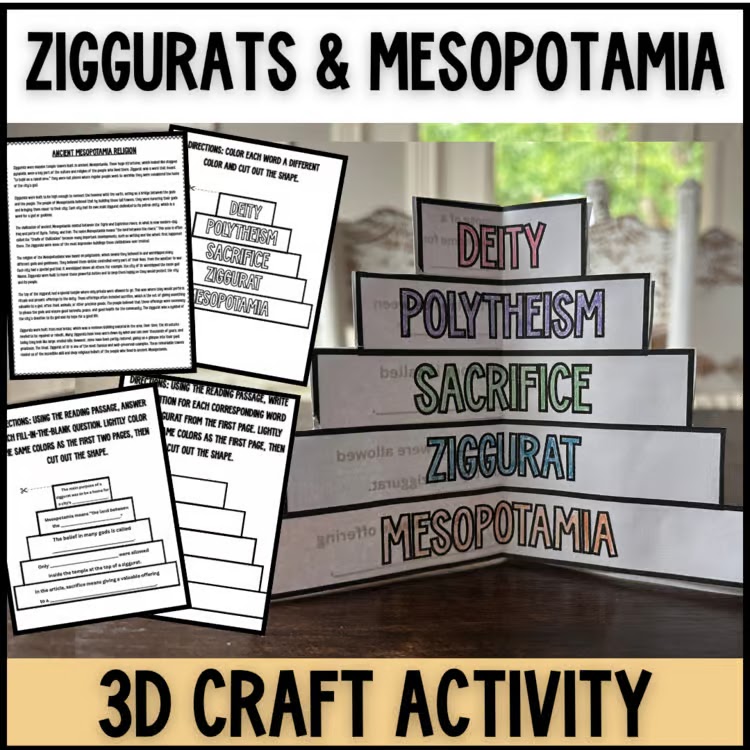
This works well as a standalone activity, a small group project, a unit review task, or a display piece after students finish studying ancient Mesopotamia. It gives them something memorable to make while still keeping the reading and content front and center.
Final Thought
When students build a ziggurat, they are not just making a paper model. They are creating a visual anchor for one of the most important ideas in ancient Mesopotamia: religion, government, and city life were deeply connected. That is the kind of hands-on activity that can make a civilization unit feel a lot more concrete.
Grab free no-prep science & social studies resources
Get instant access to review templates, vocabulary posters, gallery walk samples, quick-check activities, and hands-on practice ideas for upper elementary and middle school.

Trey
Trey creates low-prep science, social studies, and ELA resources for upper elementary and middle school teachers through A Dad’s Classroom.