
Fun Ways to Teach Energy in Ecosystems in Middle School Science
Teaching energy in ecosystems can be such a fun part of the year, but it can also turn into one of those units where students memorize a few vocabulary words without really understanding what is happening. They may know the terms food chain or food web, but putting all of the pieces together is where they often need more support.
When I teach this topic, I like to keep it visual, active, and discussion-heavy. Students need chances to see the patterns, talk through the relationships, and apply what they know in more than one way. If you are looking for some fresh ideas, here are a few teacher-friendly strategies that make energy flow through ecosystems feel much more concrete.
1. Start with a simple organism chain students can actually picture
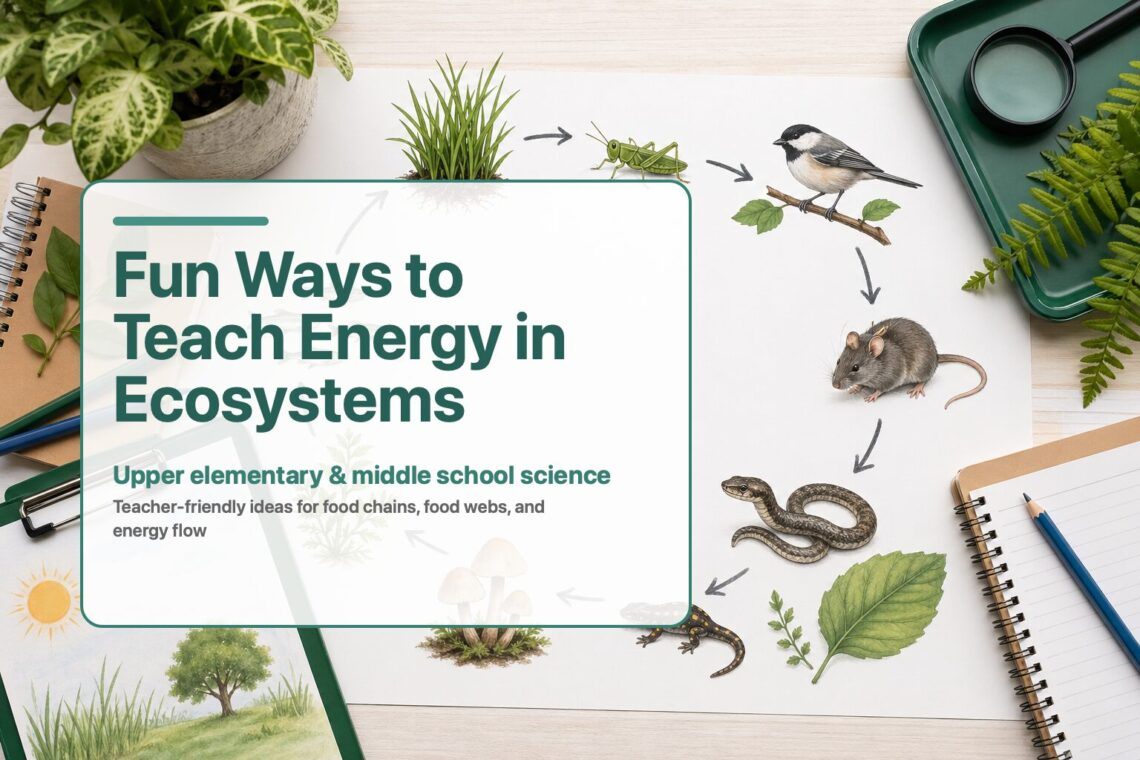
Before jumping into formal notes, begin with a tiny example students can follow right away. A plant, a grasshopper, a frog, and a snake is often enough to get the conversation going. Ask students what each organism needs, where the energy starts, and what happens if one part of the chain changes.
That kind of quick discussion gives students an entry point before the vocabulary starts piling up. It helps them see that this is really a story about relationships and survival, not just a list of science terms to memorize.
2. Use visuals that make energy movement easy to track
Energy in ecosystems is much easier to understand when students can literally trace it with their eyes. Arrows, color coding, anchor charts, and quick sketches go a long way here. I like to model how energy moves from producers to consumers and then have students build or label their own diagrams.
This is also a great place to compare a straightforward food chain with a more complex food web. Students usually feel more confident when they can see both side by side and talk about how one path is simple while the other shows many connected relationships.
3. Let students sort, move, and talk
Hands-on sorting activities work really well in this unit. Give students cards with organisms, roles, or ecosystem scenarios and let them organize the pieces into chains or webs. Once they build one, ask them to defend their thinking. Why does that organism belong there? What would happen if it disappeared? Where is the original source of energy?
That little bit of movement makes a big difference. Instead of passively listening, students are making decisions and talking through the science in a way that feels much more natural.
4. Add a focused review activity that mixes reading and comprehension
Once students have the basics, I like to give them something that brings the content together in a more structured way. A good review activity can help students revisit food chains, food webs, vocabulary, and cause-and-effect thinking without it feeling like another round of plain notes.
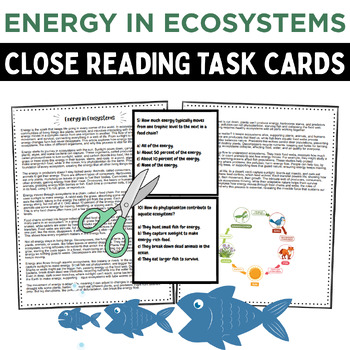
One resource that fits nicely here is my Energy in Ecosystems Task Cards. It includes an engaging reading passage along with task cards that help students work through comprehension, content knowledge, context clues, and ecosystem relationships in a way that feels purposeful and manageable.
If you want a ready-to-use option for review, you can take a closer look below.
Classroom tip: I especially like using this kind of activity after students have already had some visual and discussion-based practice. At that point, the reading and questions feel like meaningful reinforcement instead of a cold first exposure to the topic.
5. End with cause-and-effect questions that push deeper thinking
One of the best ways to check understanding is to ask students what happens when something in the ecosystem changes. What if a predator population drops? What if a producer is removed? What if one organism suddenly has fewer food sources?
These questions help students move beyond naming parts of a food web and into actual scientific reasoning. They begin to see ecosystems as connected systems instead of isolated facts, which is really the whole goal of the unit.
Final thoughts
If you are looking for fun ways to teach energy in ecosystems, variety really matters. A strong lesson sequence gives students a simple starting point, clear visuals, chances to move and talk, and a thoughtful review activity that ties everything together.
If you want an easy way to reinforce food chains, food webs, and energy flow, check out my Energy in Ecosystems Task Cards. It is a nice fit for review days, stations, early finishers, or test prep when you want students practicing the content without losing engagement.
Happy teaching!

