
6th Grade Science Gallery Walk Mega Bundle for Middle School Science Stations
Sixth grade science asks students to take in a lot: vocabulary, systems, examples, cause and effect, evidence, and all the little details that show up on assessments. If every lesson turns into notes or a long passage, they start fading fast.
That is why I like using 6th grade science gallery walk activities. They are not magic, but they do give students a better mix of reading, movement, writing, and discussion. Great lessons need variety, and gallery walks make that variety easy to build into a normal week.
Why 6th grade science gallery walks work
A gallery walk gives students one chunk of information at a time. They rotate, read the station, record the important details, and move on. It is simple, but that simple routine helps a lot in middle school science.
Students are still doing real science reading. They are still writing. They are still using vocabulary. But because they are moving around the room, the lesson feels less like “sit here and survive this packet.” That matters.
Use middle school science stations to break up heavy content
Earth science, life science, physical science, weather, energy, ecosystems—none of these units are exactly light on vocabulary. Middle school science stations help break that content into pieces students can actually handle.
Instead of giving students everything at once, each station has a focused reading task. Students can pause, think, write, and then move to the next idea. It feels more manageable for them and honestly more manageable for the teacher too.
Keep the routine simple and repeatable
The best part of using science gallery walks often is that students get better at the routine. Once they know how to rotate and what good station work looks like, you do not have to reteach the structure every time.
I like keeping expectations really clear:
- Read the station carefully.
- Record the required information.
- Use the text as evidence.
- Rotate calmly when it is time to move.
- Be ready to discuss patterns or big ideas at the end.
That gives students enough independence to feel trusted, but enough structure that the room does not fall apart.
A 6th Grade Science Gallery Walk Mega Bundle
If you want a bank of stations ready to go, my 6th Grade Science Gallery Walk Mega Bundle was made for this exact routine. It includes 28 no-prep science gallery walks for middle school science stations, introductions, review days, small groups, and independent work.
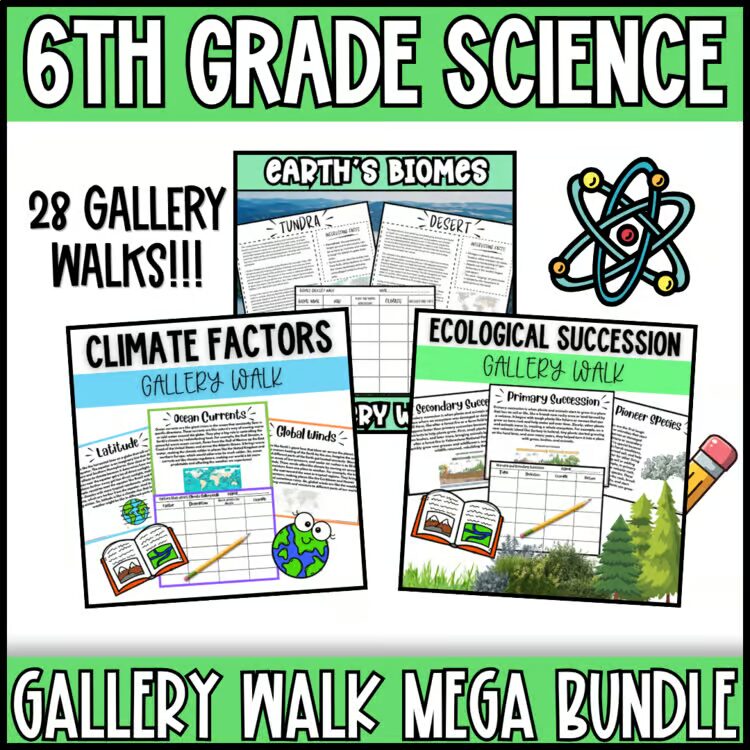
The bundle includes reading passages and student response sheets, so students have a clear job at every station. It covers a wide range of 6th grade science topics, including Earth science, life science, physical science, weather, energy, ecosystems, and more.
Easy ways to use science gallery walk activities
You do not have to save gallery walks for a special observation day. They fit into regular teaching really well:
- Introduce a new unit: Let students preview vocabulary and big ideas before direct instruction.
- Review before a quiz or test: Use stations to revisit important examples and concepts.
- Support small groups: Let groups rotate while you pull a few students for reteaching.
- Build in movement: Give students a structured reason to get up and reset.
- Leave a dependable sub plan: Print-and-go stations can save the day.
Make science review feel less like review
Students can smell a boring review day from across the hallway. Gallery walks help because students are still reviewing, reading, and writing, but the movement makes it feel more approachable.
If you like lessons that get students reading, moving, looking, and writing, middle school science gallery walk activities are a great routine to keep in your back pocket. You can check out the 6th Grade Science Gallery Walk Mega Bundle for middle school science stations here.

