Teaching Invasive Species with Science Stations and Gallery Walks
Invasive species is one of those science topics that students usually find interesting once they have examples in front of them. Kudzu taking over, zebra mussels spreading, Asian carp causing problems — the real-world part is there. The tricky part is helping students slow down enough to understand why these species are such a big deal for ecosystems.
That is why I like teaching this topic with movement and short reading chunks. An invasive species gallery walk gives students a way to read, move, look closely, and write about human impact on ecosystems without turning the whole lesson into one long passage.
Start with the basic question: what makes a species invasive?
Before students can explain the impact, they need a simple definition they can actually use. I like starting with the idea that an invasive species is not just a plant or animal in a new place. It is a nonnative species that spreads and causes harm.
That little distinction matters. Students may hear “new species” and assume it is automatically bad, or they may focus only on whether the animal looks scary. A quick warm-up can help:
- Where did this species come from?
- How did it spread?
- What native species or ecosystem parts does it affect?
- What evidence shows that it is causing harm?
Those questions give students something concrete to look for during an ecosystems activity or human impact lesson.
Use science stations to keep the reading manageable
I am biased toward science stations because they make informational text feel less intimidating. Instead of handing students several pages and hoping they hang with it, each station gives them one focused job.
For invasive species, that works really well. Students can rotate through examples, read about one organism at a time, and record the important details before moving on. It keeps the lesson moving, but it still gets students reading carefully.
My favorite station prompts are simple:
- What is the invasive species?
- Where did it originally come from?
- How does it spread?
- What problem does it create in the ecosystem?
Nothing fancy. Just enough structure to keep them focused and accountable.
Get students talking about human impact on ecosystems
Invasive species are a great bridge into human impact because students can see that ecosystems do not change randomly. Sometimes species spread through shipping, travel, landscaping, released pets, or other human choices.
After students finish reading, I like asking them to make the connection out loud or in writing: “What role did people play in this problem?” It does not have to become a huge debate. Even one sentence helps students connect the science content to cause and effect.
This is also where the topic becomes more than vocabulary. Students start seeing biodiversity, competition, food webs, and ecosystem balance in a more practical way.
Try an invasive species gallery walk activity
If you want this structure already built, I created this Invasive Species Gallery Walk | Human Impact Reading Stations Activity for upper elementary and middle school science.
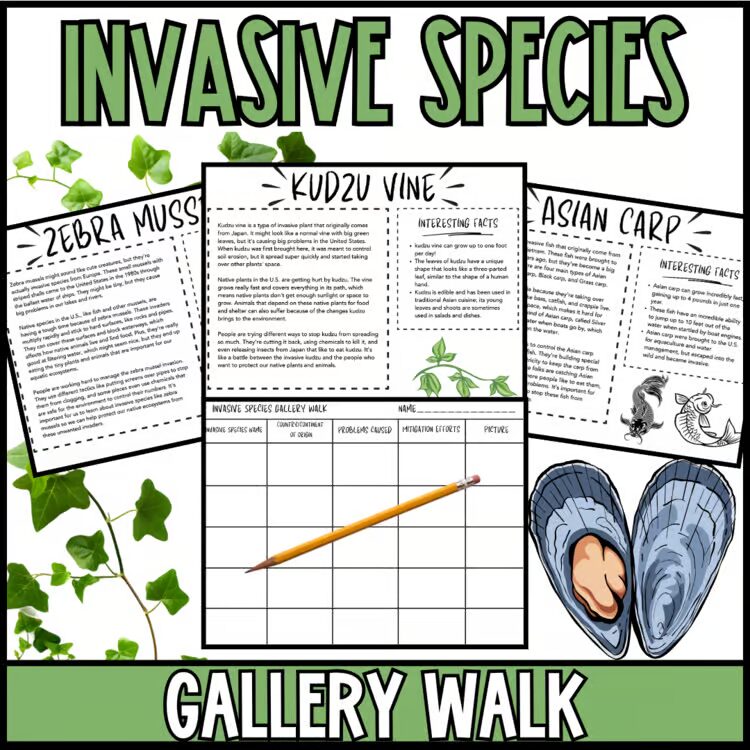
Students rotate through reading stations, learn about different invasive species, and complete a recording sheet as they go. It works well during ecosystems, biodiversity, environmental science, test prep, or review. I like it because it gets students reading, moving, and writing, but the prep stays very reasonable.
End with a quick solution or mitigation question
Once students understand the problem, give them a chance to think like problem-solvers. This can be quick, but it makes the lesson feel more complete.
Try one of these exit questions:
- Which invasive species seemed most harmful? Why?
- What could people do to slow the spread?
- What native species might be affected first?
- What evidence would you need before choosing a solution?
Those questions help students pull the pieces together instead of just copying facts from a station. And honestly, that is the goal with a good invasive species activity — students should leave understanding how one change can ripple through an ecosystem.
If you need a ready-to-use option, you can check out the Invasive Species Gallery Walk Reading Stations Activity here. It is a simple way to make human impact and ecosystems feel more concrete for students.
