

4 Engaging Valentine’s Day Activities for Upper Elementary (That Aren’t “Cringe”)
Valentine’s Day with upper elementary and middle school students is a very specific classroom experience. There is candy, energy, side-eye, social drama, and at least one student who thinks everything is cringe.
The little-kid crafts do not always work anymore, but skipping the day completely can feel boring too. I like finding Valentine’s Day activities for upper elementary that still feel festive without pretending students are younger than they are.
Here are four ideas that usually land well with bigger kids.
1. Write a love letter or breakup letter to a character
This is a fun way to sneak in character analysis. Have students write a love letter, thank-you letter, or breakup letter to a character from their current novel, read aloud, or independent reading book.
The rule is that they have to use text evidence. If they are breaking up with a character, they need to explain which actions or choices caused the problem. If they admire a character, they need to point to specific traits, decisions, or quotes.
It feels silly and seasonal, but it is really character traits, motivation, and evidence-based writing. My favorite kind of holiday activity.
2. Speak their language with Brain Rot Valentine’s Day cards
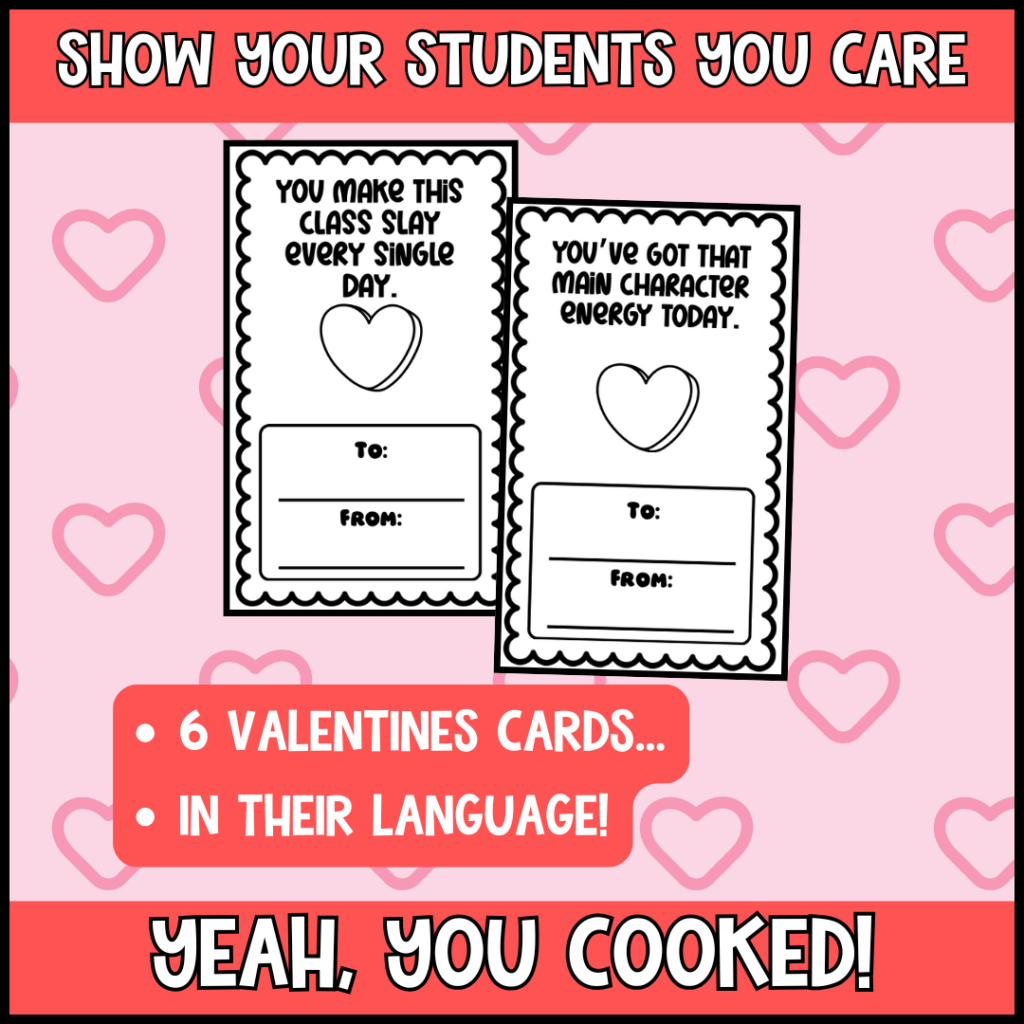
Okay, this is the one I’m most excited about. If you teach students around 10-14, you already know they have their own language. Some days I hear “mid,” “no cap,” “sigma,” and “vibe check” enough times to start questioning reality.
So I decided to lean into it with these Brain Rot Valentine’s Day Cards. They are printable cards from teacher to student using the slang students are already laughing about.
I like them because they are funny without taking over the whole day. They are also easy. Print, cut, and pass them out. There is an editable Canva link too if you want to tweak the wording for your own class.
Mostly, it is a small relationship-building thing. Students like knowing you notice their world a little bit. You do not have to become fluent in brain rot, but using it correctly one time? That can go a long way.
If you want to pass the vibe check this year, you can grab these cards here.
3. Do a compliment bag challenge
This is a classic, but it still works if you give it enough structure. Give each student a paper bag or envelope to decorate. Then assign students a few classmates so everyone receives something.
The important rule: no generic compliments. “You are nice” is fine in real life, but for this activity, students need to be specific.
- “You helped me understand the math problem yesterday.”
- “You always include people during group work.”
- “Your questions make class discussions better.”
It turns Valentine’s Day into a quick classroom community moment instead of just a candy exchange. And honestly, some students keep those little notes for a long time.
4. Make Valentine’s Day math libs
When in doubt, make the academic work a little ridiculous. Take your regular math skill and swap in dramatic Valentine’s Day scenarios.
Instead of a plain distance problem, Romeo is running to buy flowers while Juliet is walking away because she is annoyed. Instead of normal fractions, students are dividing a box of chocolates. Instead of basic graphing, they are tracking candy heart flavors.
It does not need to be complicated. A tiny seasonal twist can make regular practice feel more fun, and students still have to do the math.
Keep it festive, not forced
The best Valentine’s Day activities for upper elementary respect that students are older, funnier, and a little harder to impress. They still want the day to feel different, but they do not want babyish.
Whether you write character letters, pass out brain rot valentines, build each other up with compliments, or add a silly math twist, the goal is the same: help students feel seen and keep the day moving. Happy Valentine’s Day, teachers 🙂
Ready-to-use classroom resource
Want this classroom resource ready to print?
Save planning time with a classroom-ready activity built for upper elementary and middle school teachers.
If you need more seasonal ideas that still feel meaningful, try these Winter Olympics classroom activities or Principal Appreciation ideas.
