
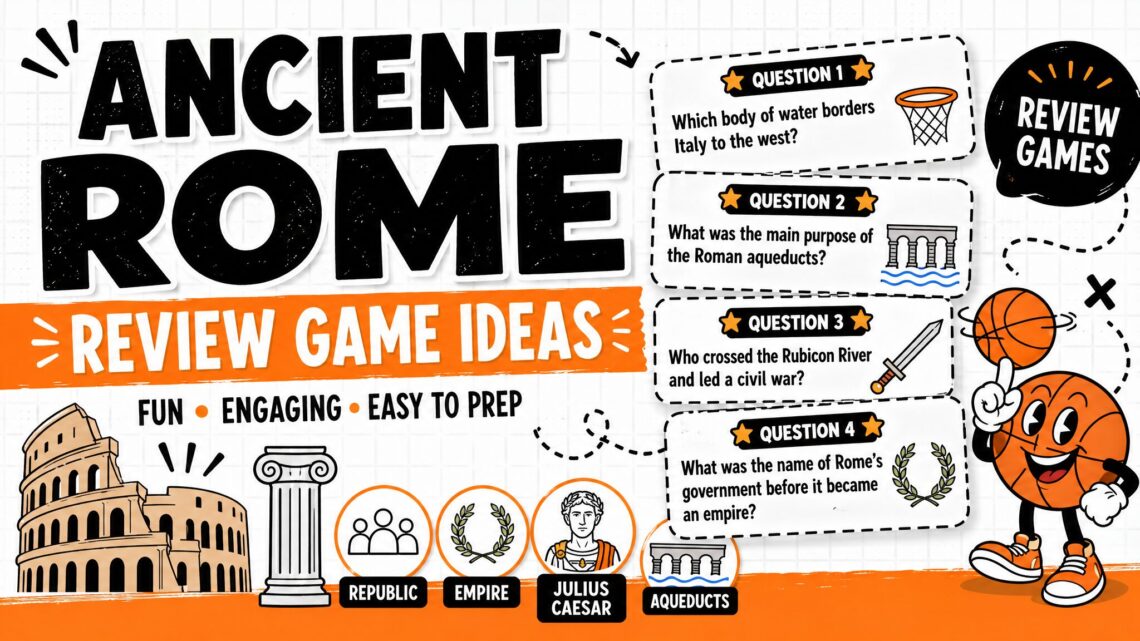
4 Easy Ways to Review Ancient Rome with a Fun Game
Ancient Rome is a huge unit, and review day can easily turn into a long list of names, dates, and vocabulary. Students need to remember the Roman Republic, Julius Caesar, Augustus, Roman engineering, the rise of Christianity, and the fall of the Western Roman Empire — but they also need a reason to stay engaged while they practice.
That is where a simple Ancient Rome review game can help. Instead of only asking students to reread notes, you can turn the final review into movement, discussion, teamwork, and quick checks for understanding.
1. Start with a quick topic sort
Before playing a review game, have students sort major Ancient Rome topics into categories. For example, students can group terms under geography, government, leaders, engineering, daily life, religion, and decline.
This is a fast way to activate background knowledge and help students see how the unit connects. It also gives you a quick look at which topics may need one more mini-review before an assessment.
2. Use short question rounds for test prep
Ancient Rome test prep works best when questions are short enough to discuss. Instead of giving students a full practice test right away, try quick question rounds. Show one multiple-choice question, let students answer independently, then have them defend their thinking with a partner.
This keeps review moving and helps students practice the reasoning behind the correct answer, not just the answer itself.
3. Make review competitive with Trashketball
Trashketball is one of those review formats that feels simple, but students usually buy in fast. Teams answer review questions, earn a chance to shoot a paper ball, and build points through friendly competition.
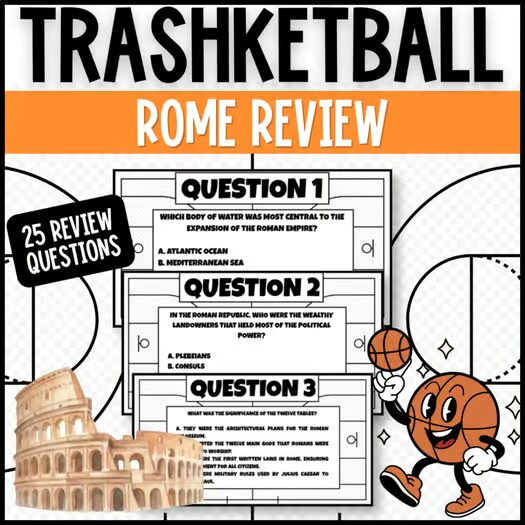
If you want a ready-to-use option, this FREE Ancient Rome Trashketball review game includes 25 multiple-choice questions with answer slides. It reviews topics like the Italian Peninsula, Roman Republic, Senate, patricians and plebeians, Julius Caesar, Augustus, aqueducts, roads, arches, Christianity, the fall of Rome, and Rome’s legacy.
It is a low-prep way to review a 6th grade Ancient Civilizations unit while keeping students active and accountable.
4. End with a one-minute reflection
After the game, give students one minute to write down three things they know well and one topic they still need to review. This helps bring the energy back into a focused test-prep mindset.
You can use these reflections to choose a warm-up question for the next class, pull a small group, or decide which topic needs one more example before the assessment.
Keep Ancient Rome review active and focused
A strong Ancient Rome review does not need to be complicated. Students need repeated exposure to the big ideas, quick feedback, and enough energy to stay engaged. Topic sorts, short question rounds, review games, and quick reflections can make test prep feel more useful and less repetitive.
With the right structure, your Ancient Rome review day can reinforce key content while still feeling fun, manageable, and student-friendly.
Grab the FREE Ancient Rome Trashketball review game here.
Ready-to-use classroom resource
Want this social studies resource ready to print?
Save planning time with classroom-ready activities from A Dad’s Classroom that are built for upper elementary and middle school teachers.
Find classroom resources