
4 Easy Ways to Teach Parts of a Flower in Upper Elementary Science
Teaching the parts of a flower is one of those life science lessons that works best when students can see, label, discuss, and revisit each structure more than once. Terms like sepal, stamen, anther, pistil, and stigma can feel like a lot at first, especially if students are only seeing them on one diagram.
The good news is that a parts of a flower lesson can be simple, visual, and active. Here are four practical ways to help upper elementary and middle school students understand flower anatomy without turning the lesson into a vocabulary list.
1. Start with a labeled flower diagram
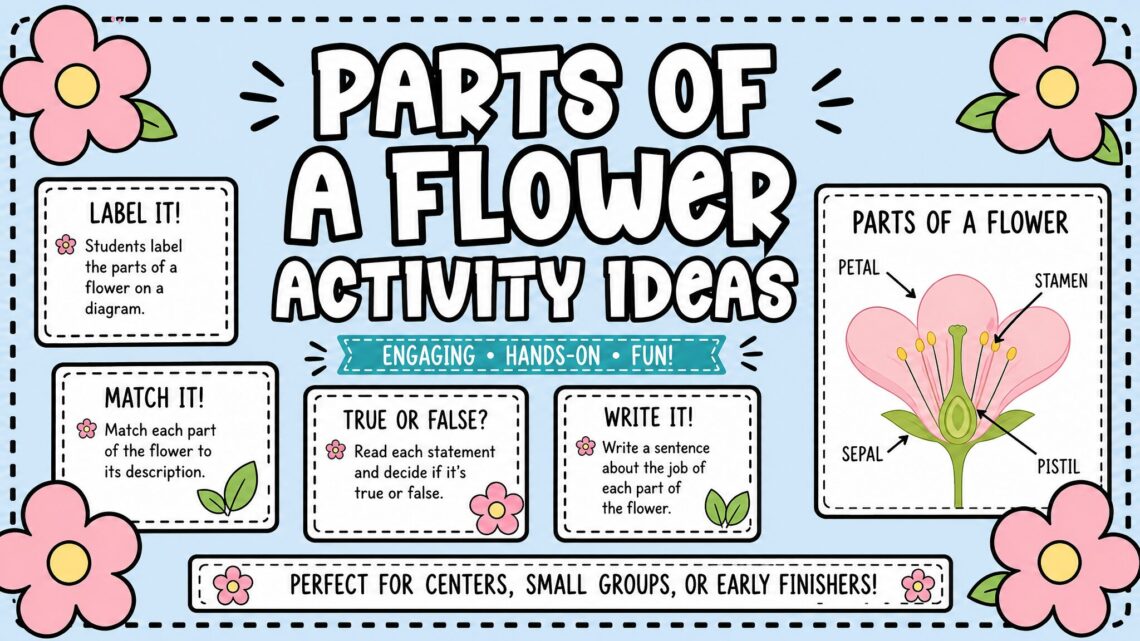
Before students read longer passages, give them a clear diagram of a flower and introduce the major structures. Keep the first pass simple: petals, sepals, stamen, pistil, stigma, anther, filament, and carpel.
As students label each part, connect it to a basic purpose. Petals help attract pollinators. Sepals protect the flower bud. The stamen and pistil are connected to reproduction. This gives students a quick mental hook before they dig deeper.
2. Use real or pictured flowers for observation
If you can bring in real flowers, even a few inexpensive grocery-store flowers can make the lesson much more concrete. Students can observe shape, color, texture, and location of different flower parts.
If real flowers are not practical, close-up photos work too. Ask students to notice what they can identify and what is harder to see. This naturally leads into why diagrams, models, and short readings are useful for understanding plant anatomy.
3. Teach flower parts with a gallery walk
A gallery walk is a great way to teach parts of a flower because students can focus on one structure at a time. Instead of asking students to absorb every term at once, they rotate through stations and read short, manageable explanations.
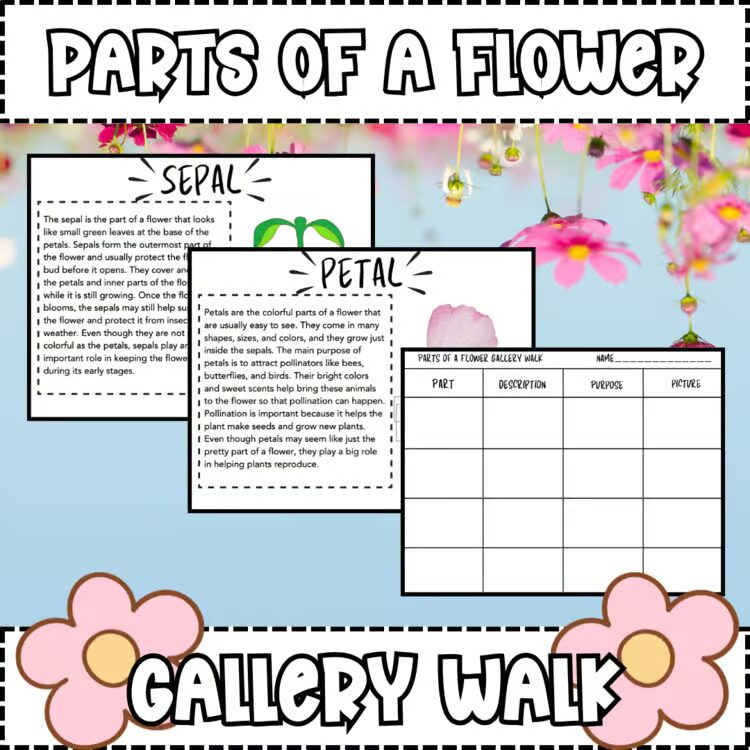
If you want a ready-to-use option, this Parts of a Flower Gallery Walk activity includes reading stations for flower structures such as sepal, petal, stamen, filament, anther, pistil, stigma, and carpel. Students record each part’s name, description, purpose, and a quick drawing, which makes it useful for both plant anatomy and science reading comprehension.
This works well as an introduction, a station rotation, or a review activity during a plant life science unit.
4. End with a quick function sort
After students have explored each flower part, help them connect vocabulary to function. Give students cards with flower part names and cards with descriptions or purposes. Then have them match each part to its role.
You can also ask students to sort parts into simple categories, such as protection, attraction, and reproduction. This helps students move beyond memorizing terms and start explaining why each structure matters.
Keep plant anatomy visual and student-friendly
When students learn flower parts through diagrams, observation, movement, and short reading stations, the vocabulary becomes much easier to understand. A parts of a flower activity does not need to be complicated. It just needs enough structure for students to see each part, read about its purpose, and explain how the parts work together.
With a visual approach and a little movement, students can make sense of flower anatomy while practicing science vocabulary, reading comprehension, and observation skills.
Grab the Parts of a Flower Gallery Walk activity here.
Ready-to-use classroom resource
Want this science resource ready to print?
Save planning time with classroom-ready activities from A Dad’s Classroom that are built for upper elementary and middle school teachers.
Find classroom resources
