Fun Ways to Teach Global and Local Winds in Middle School Science
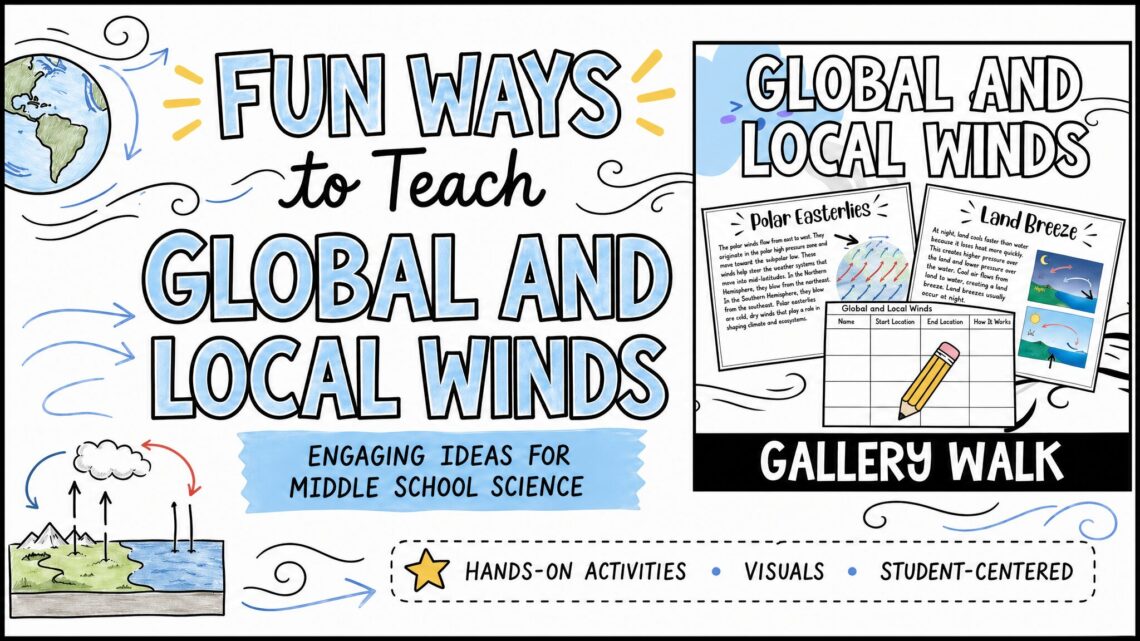
Looking for fun ways to teach global and local winds? Try these middle school science strategies, including visuals, comparison work, and a gallery walk activity.
Ancient Civilizations GRAPES Activities: Gallery Walks & Reading Stations
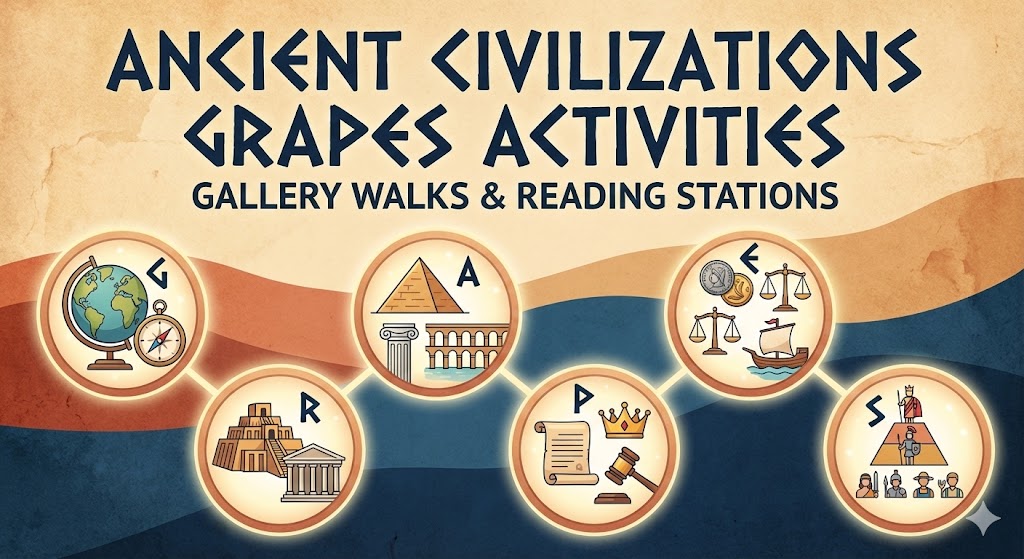
Ancient civilizations can start to blur together for students. Egypt, Mesopotamia, India, China, Greece, Rome—new names, new geography, new achievements, new religions. It is a lot for a middle school brain to organize. That is why I like using GRAPES. Geography, Religion, Achievements, Politics, Economics, and Social Structure gives students a repeatable way to think. Once they know the categories, they have a mental filing cabinet for every civilization you teach. Use the same framework all year The best part of GRAPES is the routine. Students are not starting from scratch every time you begin a new unit. They already know what kinds of questions to ask: Where did people…
3 Engaging Strategies for Teaching the Persian Wars
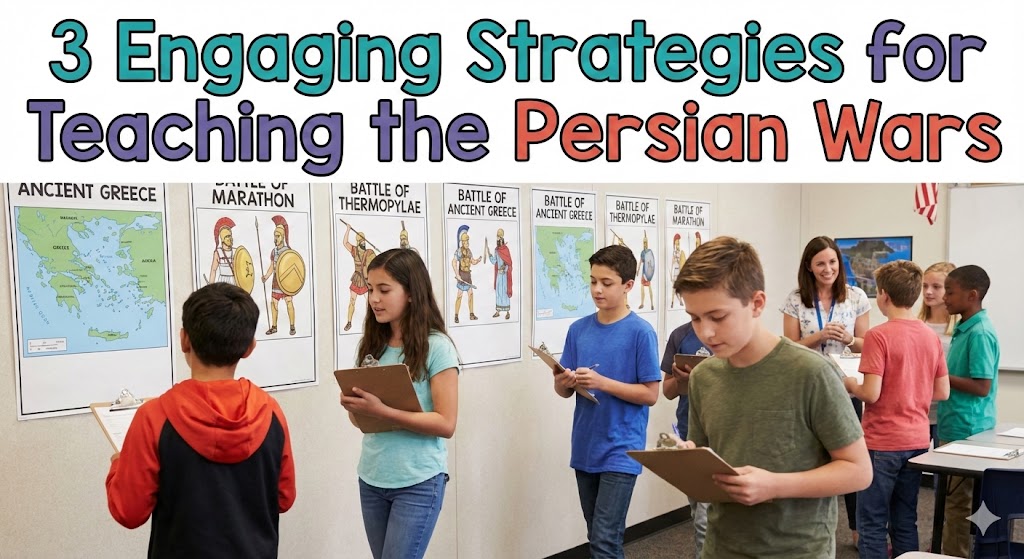
The Persian Wars can either be really exciting or really confusing for students. Battles, city-states, leaders, invasions, maps—it can turn into a list of names quickly if we are not careful. I like teaching the Persian Wars as a story. Not a fake dramatic story, but the real one: Greek city-states with plenty of disagreements suddenly having to face a huge outside threat. That gives students a reason to care about Marathon, Thermopylae, Salamis, and why these battles mattered. Start with the big question Before getting into details, I like asking students why smaller groups might unite against a larger empire. What would make rivals cooperate? What would they risk…
Unlocking the Magic: 4 Strategies for Teaching Text Structure with Disney
Text structure is important, but middle schoolers do not usually cheer when they hear “cause and effect” or “compare and contrast.” I get it. The skill matters, but the passages we use can make or break the lesson. That is why I like using familiar topics when I teach text structure. If students already care a little bit about the content, they have more brain space to notice how the author organized the information. Disney is perfect for this because students usually have background knowledge before the reading even starts. Start with the structure, not a giant passage Before reading a full text, I like giving students quick examples. A…
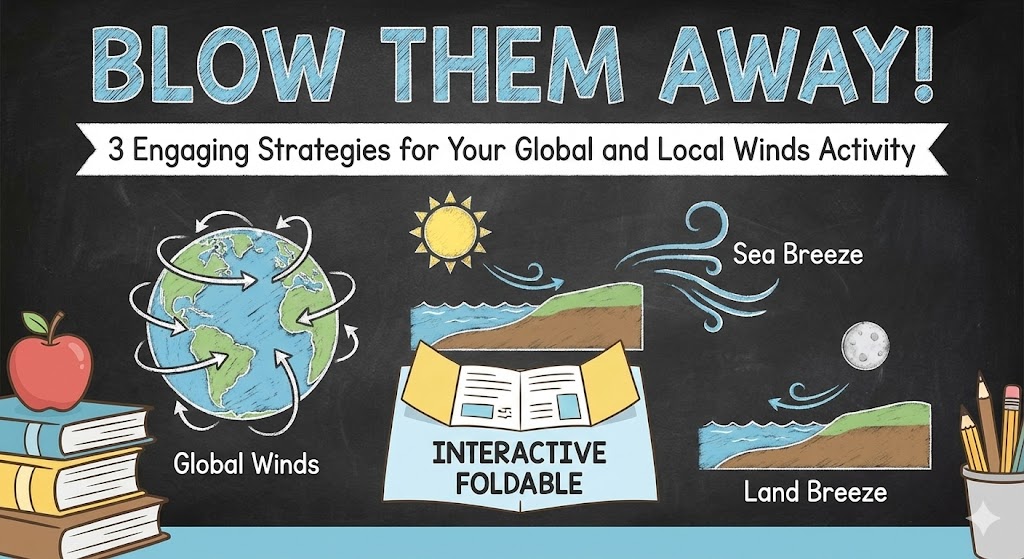
Blow Them Away! 3 Engaging Strategies for Your Global and Local Winds Activity
Wind is hard to teach because students cannot hold it, pass it around, or look at it under a microscope. They feel it every day, but the science behind global and local winds can still feel invisible. When I plan a global and local winds activity, I want students doing more than copying arrows. They need to connect wind to unequal heating, pressure, convection, Earth’s rotation, and real examples like sea breezes and land breezes. Give students something to build or fold Interactive notebook pieces are great for this topic because students need an organized place to put several similar-sounding terms. Trade winds, westerlies, polar easterlies, sea breeze, land breeze—it…
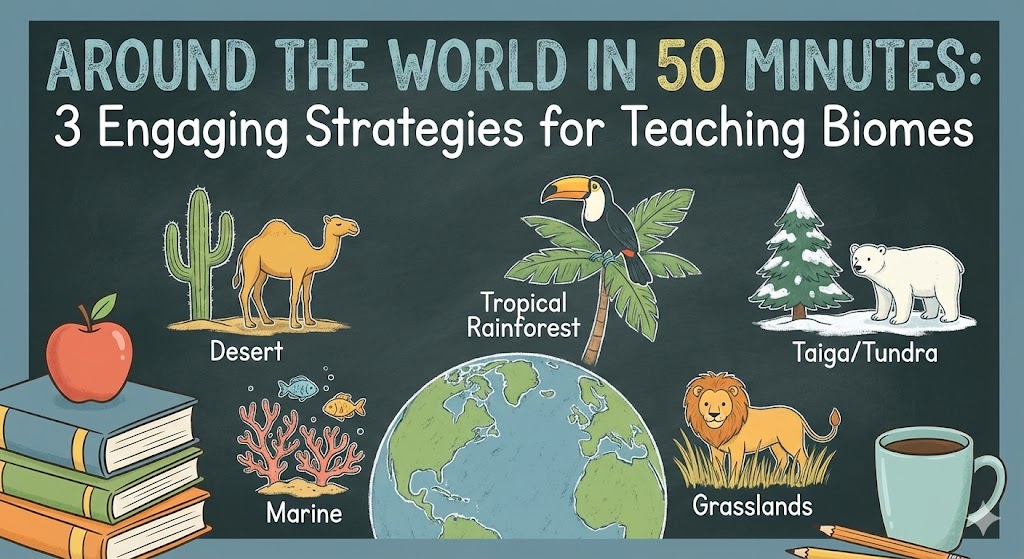
Around the World in 50 Minutes: 3 Engaging Strategies for Teaching Biomes
Teaching biomes is fun because most students still think animals, plants, and extreme environments are interesting. The hard part is not usually buy-in. The hard part is helping students keep track of climate, location, plants, animals, and adaptations without turning the whole unit into a chart-copying marathon. My favorite solution is variety. Get students reading. Get them moving. Get them looking closely at visuals. Then make them pull the information back out of their memory. Use a biome gallery walk A gallery walk is such a good fit for teaching biomes because each biome has its own “feel.” Students can move from station to station and collect information about deserts,…
A World of Faith: 3 Strategies for Teaching World Religions in Middle School
Teaching world religions takes some care. You want students to learn accurate information, ask thoughtful questions, and understand how religion has shaped history and culture, but you also want the classroom tone to stay respectful. For middle schoolers, I think structure helps a lot. If students know they are learning about origins, beliefs, practices, texts, holidays, and cultural influence, they are less likely to treat the unit like a random list of facts. Set the tone first Before we start, I like to remind students that the goal is understanding, not debating whose beliefs are “right.” We are studying world religions as part of history and culture. That simple framing…
Survival of the Fittest: 3 Engaging Hatchet Novel Study Activities
Hatchet is one of those books that still grabs middle schoolers. Brian alone in the wilderness with a hatchet, a windbreaker, and a whole lot of problems—students usually want to know what happens next. The danger is turning a great survival story into chapter question overload. I want students to understand plot, character development, theme, conflict, and evidence, but I do not want to squeeze all the excitement out of the book. Make review feel like survival Review does not have to be a packet. A game format works really well with Hatchet because the novel already has suspense and problem-solving built into it. I created this Hatchet Board Game…
Storm Chasers in the Classroom: 3 Engaging Severe Weather Activities
Severe weather usually gets students’ attention right away. Tornadoes, hurricanes, blizzards, thunderstorms—there is a built-in wow factor. The trick is turning that curiosity into actual science understanding. I want students to know more than “tornadoes are scary.” They need to understand how severe weather forms, what conditions are involved, how people stay safe, and why different events happen in different places. Start with what students already wonder Before notes, I like asking students what severe weather questions they already have. Why do tornadoes spin? Why do hurricanes form over warm ocean water? What makes a storm severe? Their questions usually give you a great starting point. It also reminds students…
3 Engaging People of the American Revolution Activities for Your Classroom
The American Revolution can turn into a long list of names really fast if we are not careful. Washington. Jefferson. Abigail Adams. King George III. Benedict Arnold. Students may recognize a few of them, but that does not always mean they understand why those people mattered. That is usually the real classroom problem with teaching the People of the American Revolution. The buy-in is there because spies, betrayal, protests, and war are interesting. But students need help seeing these figures as real people making hard choices, not just names to memorize for a quiz. My favorite fix is to build in variety. Get them moving, reading, talking, and using evidence.…