Causes of the American Revolution Gallery Walk Activity for Upper Elementary
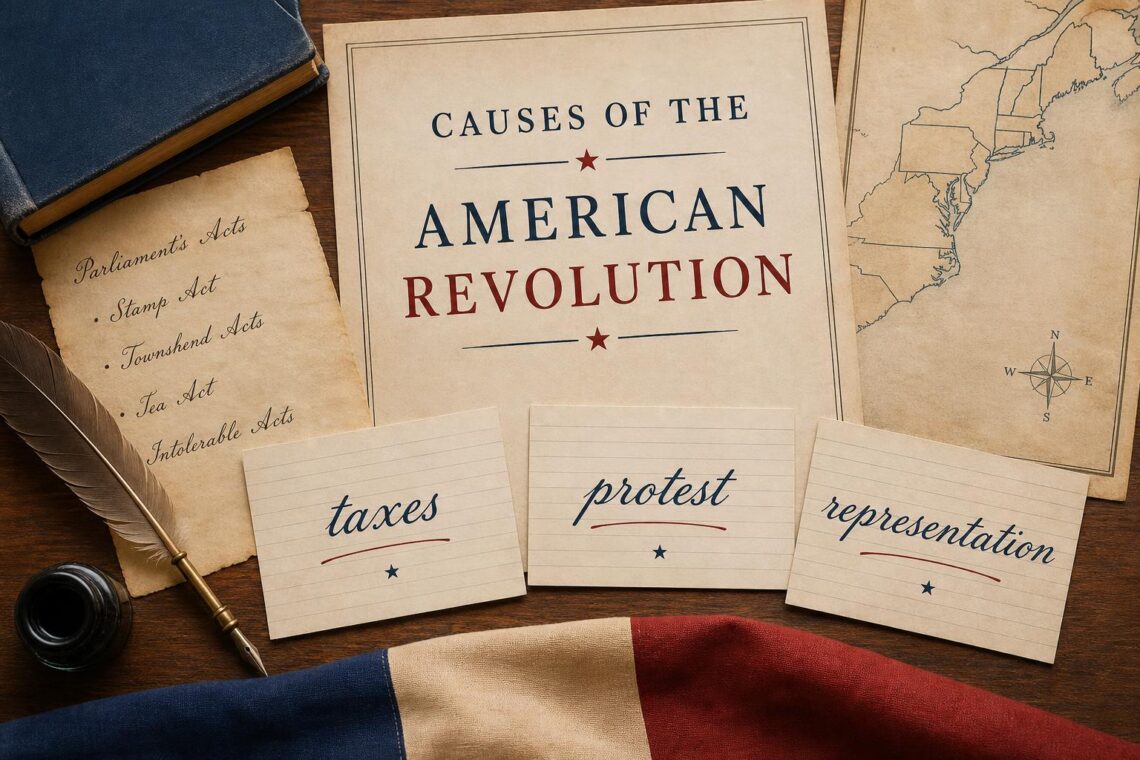
Teaching the causes of the American Revolution can get tricky because students are usually juggling a lot at once: taxes, protests, British laws, colonial reactions, and the bigger question of why people finally decided independence was worth the risk.
When I teach this topic, I want students to see the Revolution as more than a list of events to memorize. The Stamp Act, Boston Massacre, Boston Tea Party, Intolerable Acts, and other turning points make more sense when students can connect each cause to how colonists felt and responded.
Why a gallery walk works for the causes of the American Revolution
A gallery walk is one of my favorite ways to slow students down without making the lesson feel slow. Instead of giving every student a long packet and hoping they stay with it, you can turn the room into a set of reading stations. Students move from station to station, read a short passage, and record the most important details.
That movement helps, especially with upper elementary and early middle school students. It gives them a clear task, a reason to talk, and a way to revisit the same big question from several angles: What pushed the colonies closer to revolution?
Focus students on cause, effect, and colonial response
The biggest mistake I see with this unit is asking students to remember every event before they understand why the event mattered. I like to keep the recording sheet simple and repeat the same thinking pattern at each stop:
- What happened?
- Why did Britain or the colonies make that decision?
- How did it affect colonists?
- How did colonists respond?
Those questions help students move from “the British taxed tea” to “colonists felt they were being controlled without representation.” That is the kind of connection that actually sticks.
Build in discussion after the stations
After the gallery walk, I would not just collect the papers and move on. The best part is the discussion that comes afterward. Ask students which cause felt most important, which reaction seemed most reasonable, or which event made conflict feel unavoidable.
You can even have students rank the causes from least to most important. There is not always one perfect answer, which is the point. Students have to use evidence from the stations to defend their thinking.
A low-prep American Revolution resource option
If you want this already built for you, I created a Causes of the American Revolution Gallery Walk reading stations activity for grades 4–6. It includes ready-to-use station readings, a student recording sheet, and teacher directions so you can set it up quickly without building every passage from scratch.
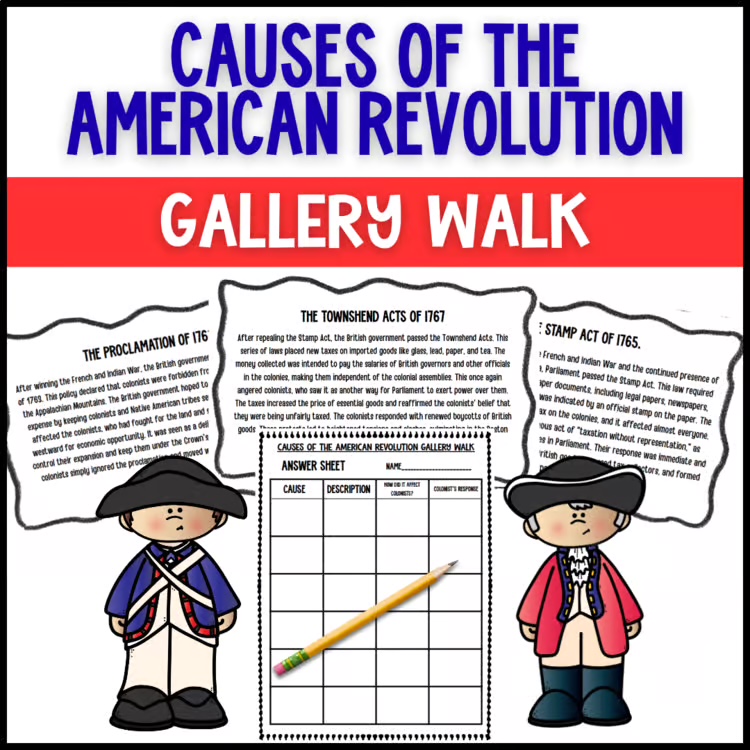
This resource works well as an introduction, a mid-unit activity, or a review before students compare the different events leading up to the Revolutionary War.
Connect it to people and perspectives
Once students understand the causes, it is much easier to talk about the people who shaped the Revolution. If you want a natural next step, I also have a post with People of the American Revolution activities that pairs well with this lesson because it moves students from events into the choices made by real historical figures.
The goal is not just for students to name the Stamp Act or Boston Tea Party. The goal is for them to explain how repeated conflicts over rights, taxes, protest, and representation pushed the colonies toward revolution. A gallery walk gives them a structured, active way to make those connections.
Grab free no-prep science & social studies resources
Get instant access to review templates, vocabulary posters, gallery walk samples, quick-check activities, and hands-on practice ideas for upper elementary and middle school.

Trey
Trey creates low-prep science, social studies, and ELA resources for upper elementary and middle school teachers through A Dad’s Classroom.