Holes Novel Study Review Game for Upper Elementary ELA
By the end of a novel, I always want students to review without it feeling like one more worksheet. A good Holes novel study wrap-up should get them going back into the text, remembering details, and talking through answers with a little energy. That is exactly where a review game can help.
For Holes, students usually remember the big pieces: Camp Green Lake, Stanley, Zero, the yellow-spotted lizards, and all the little connections that finally come together. The tricky part is getting them to slow down and retrieve those details before an assessment. A Holes review game gives them a reason to do that without the room feeling heavy.
Start Your Holes Novel Study Review With Quick Retrieval
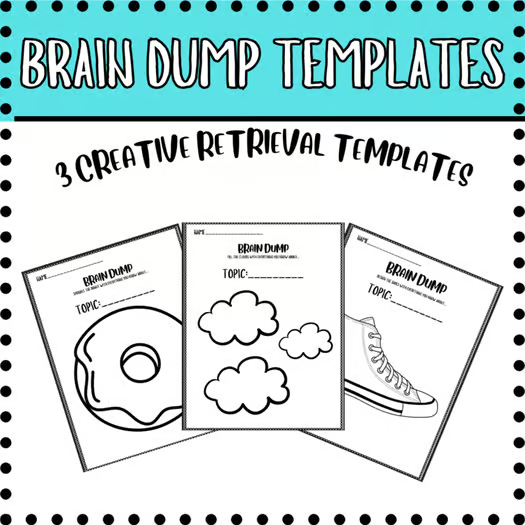
Before students compete or play anything, I like giving them a few quiet minutes to brain dump what they remember. Characters, settings, important objects, chapter events, theme ideas — anything counts. This tiny step helps the students who need a little warm-up before the faster part of the lesson starts.
Then, when you move into a novel review game, students are not just guessing. They have already crawled back into their memory a bit, which makes the game more useful and a lot less random.
Use Movement So Review Does Not Feel Like a Test
I’m biased toward review activities that get students moving, reading, discussing, and retrieving. Trashketball is one of those classroom routines that still feels simple, but students buy into it quickly. They answer a question, check their thinking, and then get that little competitive moment that keeps the room awake.
This works especially well for Holes because the book has so many details students need to connect. A reading review game can ask about plot, characters, cause and effect, and those smaller comprehension pieces without feeling like a long packet of Holes comprehension questions.
Mix Individual Thinking With Team Talk
My favorite way to run a review game is to avoid letting one confident student do all the work. Give everyone a chance to think first. Even 20–30 seconds of silent thinking before teams talk can make the discussion better.
After that, teams can compare answers and defend their choices. This is where the review becomes more than “right or wrong.” Students have to explain why a detail matters, remember where it happened, or connect it to another part of the novel.
A Low-Prep Holes Review Game Option
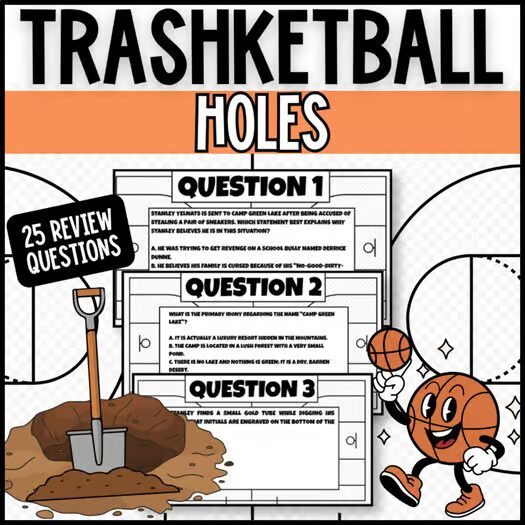
If you want the review game already built, I created a Holes Trashketball Review Game for upper elementary and middle school ELA. It includes 25 multiple-choice questions with answer slides, so you can present it, keep score, and move through an end-of-unit review without building everything from scratch.
I like this kind of ELA novel study activity because it still asks students to think, but the basketball-style review format gives the lesson a little more life. It is useful before a quiz, test, discussion day, or any time your class needs one more pass through the book before moving on.
Keep the Review Focused and Fast
Whether you use task cards, a slideshow, whiteboards, or Trashketball, I would keep the goal simple: get students to retrieve key details from the novel and explain their thinking. You do not need a giant project every time you finish a book. Sometimes the best review is quick, focused, and just fun enough that students forget they are doing test prep.
A strong Holes novel study review can be low-prep and still feel active. Get them reading, remembering, moving, and talking — that is usually the sweet spot.
Grab free no-prep science & social studies resources
Get instant access to review templates, vocabulary posters, gallery walk samples, quick-check activities, and hands-on practice ideas for upper elementary and middle school.