Storm Chasers in the Classroom: 3 Engaging Severe Weather Activities
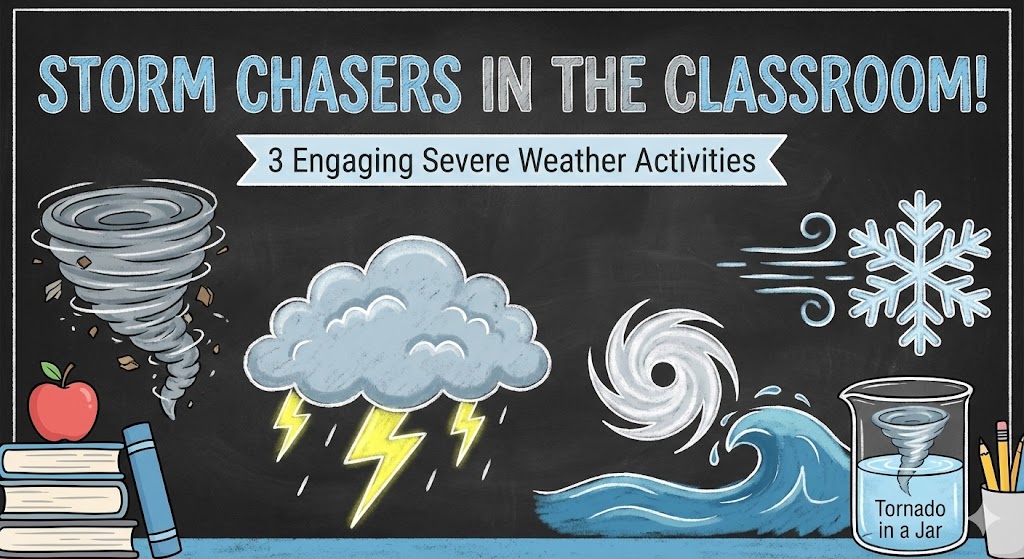
Severe weather usually gets students’ attention right away. Tornadoes, hurricanes, blizzards, thunderstorms—there is a built-in wow factor. The trick is turning that curiosity into actual science understanding.
I want students to know more than “tornadoes are scary.” They need to understand how severe weather forms, what conditions are involved, how people stay safe, and why different events happen in different places.
Start with what students already wonder
Before notes, I like asking students what severe weather questions they already have. Why do tornadoes spin? Why do hurricanes form over warm ocean water? What makes a storm severe? Their questions usually give you a great starting point.
It also reminds students that science explains real things they have seen on the news, experienced at home, or wondered about during a stormy day.
Use a severe weather gallery walk
A gallery walk is my favorite way to cover several types of severe weather without making the lesson feel like a giant information dump. Students can rotate through tornadoes, hurricanes, thunderstorms, blizzards, floods, and other events while reading and recording important details.
I made this Severe Weather Events Gallery Walk for that exact reason.

Students get movement, reading practice, and science content all in one. And honestly, with a topic this visual, it feels wrong to keep them sitting the entire time.
Build in safety and cause-and-effect thinking
Severe weather lessons are a great chance to practice cause and effect. Warm moist air, cold fronts, low pressure, rotation, ocean temperatures—students can connect conditions to outcomes.
I also like including safety decisions. What should people do during a tornado warning? Why are storm surge and flooding so dangerous during hurricanes? These questions make the science feel practical.
Connect severe weather to the rest of your weather unit
Severe weather fits naturally with air masses and weather fronts and global and local winds. Students understand storms better when they see the larger weather patterns behind them.
Severe weather already has the attention-grabbing part handled. Add movement, visuals, and thoughtful questions, and students can move from “wow” to real understanding.
Classroom-ready resource
Want the ready-to-use version?
If you want the activity without building it from scratch, this resource is ready to print, share, and use with upper elementary or middle school students.
Grab free no-prep science & social studies resources
Get instant access to review templates, vocabulary posters, gallery walk samples, quick-check activities, and hands-on practice ideas for upper elementary and middle school.