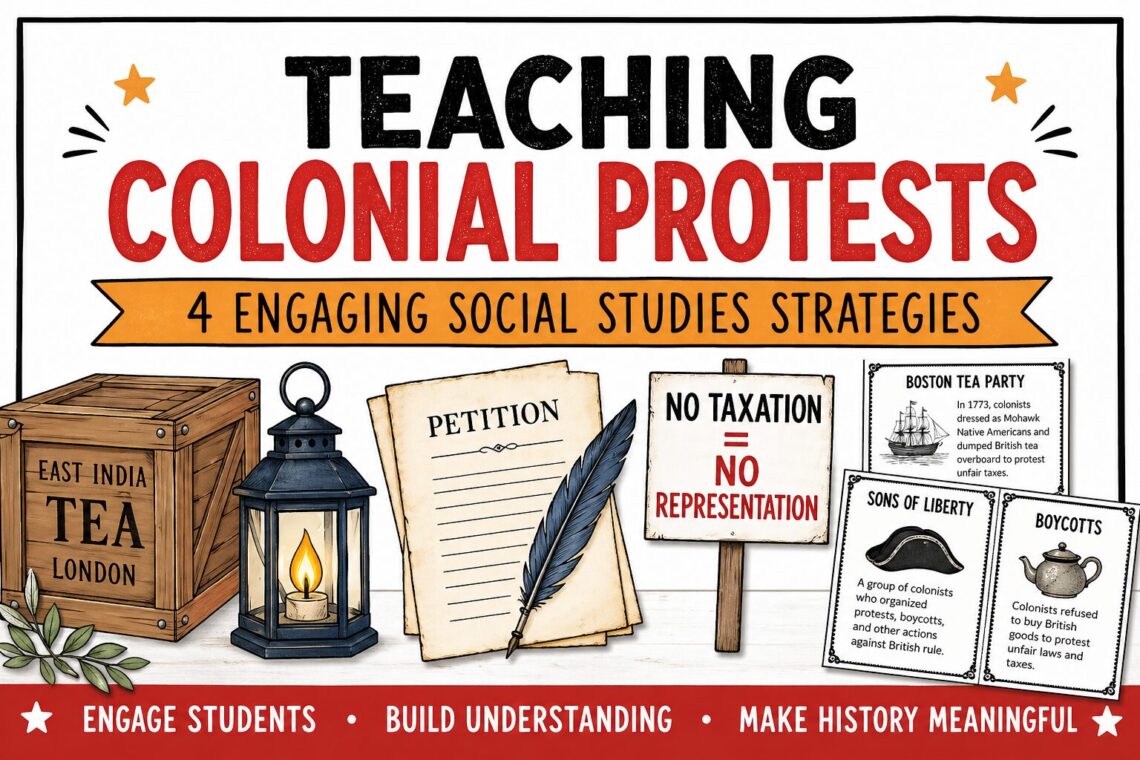
Teaching Colonial Protests: 4 Engaging Strategies for Upper Elementary Social Studies
Teaching colonial protests is one of those social studies topics that can feel huge at first. There are taxes, British policies, angry colonists, major events, and a lot of new vocabulary for students to keep straight. But when students get to see the different protest methods side by side, the road to the American Revolution starts to make much more sense.
If you are teaching colonial America in 4th or 5th grade, here are four practical ways to help students understand how colonists protested British rule — without turning the lesson into a long lecture.
1. Start with the big question: Why did colonists protest?
Before jumping into individual events, give students a simple guiding question: Why did some colonists believe British rule was unfair?
This helps students connect details back to the bigger idea. As students learn about taxes, boycotts, petitions, and the Boston Tea Party, they can keep asking, “What problem were colonists responding to?” and “How did they try to make their voices heard?”
A quick anchor chart works well here. Add columns for the problem, the protest method, and the colonial point of view. Students can add examples as the unit continues.
2. Use a gallery walk for colonial protest methods
A gallery walk is a great way to make colonial protests more active and student-centered. Instead of reading one long passage as a whole class, students rotate through short reading stations and focus on one protest method at a time.
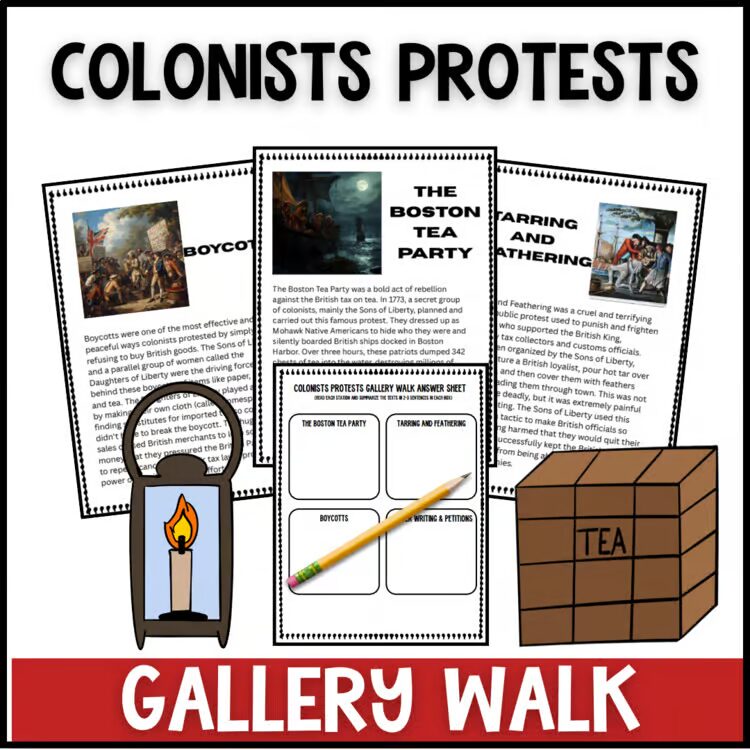
The Colonists Protests Gallery Walk activity is designed for exactly this. Students visit stations about the Boston Tea Party, tarring and feathering, colonial boycotts, and letter writing or petitions. At each station, they read a short informational text and write a concise summary, which makes it useful for both social studies content and reading comprehension practice.
You can use it as an introduction to the causes of the American Revolution, a review activity before assessment, or a meaningful station rotation during your colonial America unit.
3. Have students compare peaceful and forceful protests
Once students understand several protest methods, ask them to compare the strategies colonists used. Boycotts and petitions were very different from tarring and feathering or destroying tea, and that difference can lead to great classroom discussion.
Try giving students a simple sort:
- Peaceful protest
- Economic protest
- Written protest
- Destructive or forceful protest
Then have students explain their choices with evidence. This helps them move beyond memorizing events and into historical thinking. They begin to see that colonists did not all respond in the same way, and not every protest had the same level of risk or consequence.
4. Build in summarizing and reflection
Colonial protest lessons can become detail-heavy fast, so summarizing is key. After students read about each protest method, have them write a two- or three-sentence summary that answers:
- What happened?
- Why did colonists do it?
- How did it connect to growing tensions with Britain?
This short writing routine keeps students focused on the main idea. It also gives you a quick way to check understanding before moving deeper into the American Revolution.
For a final reflection, ask students which protest method they think was most effective and why. This makes the lesson feel more meaningful because students have to use evidence, not just recall facts.
Make colonial America active and easier to understand
When students can compare protest methods, talk through causes and effects, and summarize what they read, the causes of the American Revolution become much clearer. A gallery walk is an easy way to give students movement, structure, and purposeful reading practice all at once.
If you want a low-prep way to teach colonial protests, the Colonists Protests Gallery Walk includes reading stations, a student answer sheet, and a completed teacher answer key so you can plug it right into your social studies plans.
Get the Colonial America Gallery Walk activity here.
Ready-to-use classroom resource
Want this social studies resource ready to print?
Save planning time with a classroom-ready activity built for upper elementary and middle school teachers.
View the resourceFor more American Revolution support, you can connect this lesson with People of the American Revolution activities or use review game ideas when students need test prep.

